




How Much Does Mushroom Farming Cost and Profit in the UK?
Learn about mushroom farming cost and profit in the UK, including startup costs, running expenses, profit margins, key factors, and ways to improve returns.
View This BlogSpecial Deal
£11.24Any Courses
Limited Time only


Understand aquaponics vs hydroponics, how they work, and which method can grow your food efficiently all year round. Continue Reading.
Modern farming is changing rapidly with creativity and technology. It’s no longer just soil, sun, and sweat; it’s a blend of technology and nature that creates a harmonious environment. It has now incorporated creativity and innovation into farming. Aquaponics and hydroponics have brought plants and fish together in a harmonious relationship.
Aquaponics is a method where fish and plants are raised together in the same system. The waste produced by fish acts as fertiliser for plants. Hydroponics is a method of growing plants in water with nutrients. This method allows the farmer to control the growth of plants and increase yields.
At the end of this blog, you will be able to understand aquaponics vs hydroponics, their key differences and which system suits your home, garden, or small-scale farm.
Aquaponics and hydroponics are new farming methods that do not use soil. Both systems depend on water for nutrients. Aquaponics is a method that brings fish and plants together to form a natural ecosystem. Fish waste is a natural fertiliser for plants. Hydroponics is a method that involves giving plants nutrient-rich water. Both systems conserve water and land and permit year-round growing.
Although both methods involve the use of water in providing nutrients, there is a big difference between the two methods. Aquaponics involves the use of fish and a natural ecosystem in providing nutrients, whereas hydroponics involves the use of nutrient-rich water in providing food to plants.
Aquaponics is a smart farming system that grows fish and plants together. Fish waste feeds the plants, and the plants clean the water naturally. This cycle creates healthy food with less water and no soil. It is eco-friendly, easy to manage, and ideal for modern sustainable farming today.
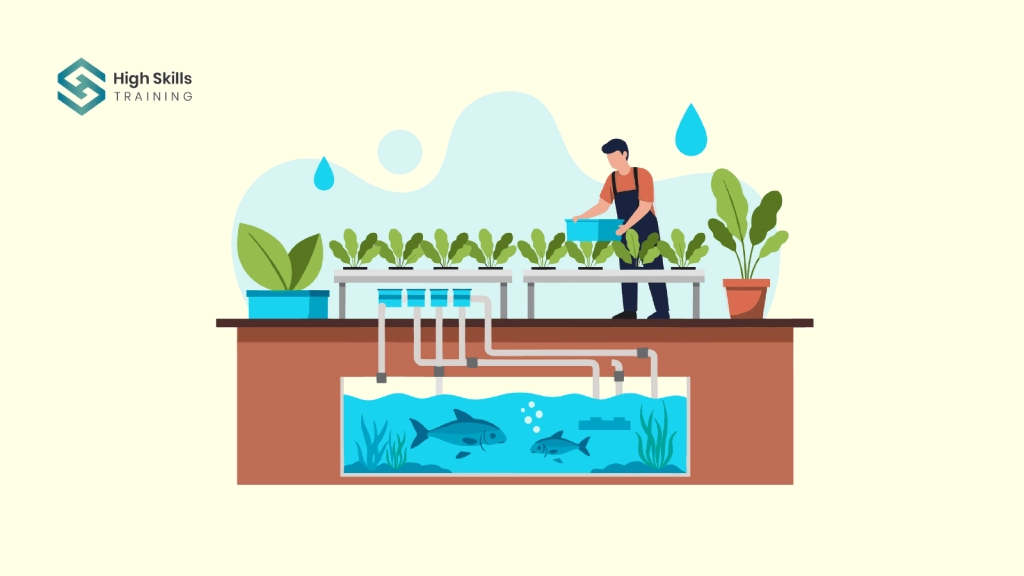
Aquaponics works as a balanced system where nature supports itself. Fish live in tanks while plants grow above or nearby. Helpful bacteria turn fish waste into plant food. This process reduces water use, avoids chemical fertilisers, and supports steady growth all year round.
1. Fish are kept in tanks – Fish produce waste as they grow, and this has valuable nutrients.
2. Water is pumped into plant beds – The fish tank is pumped to irrigate the plants with nutrient-rich water.
3. Plants absorb nutrients – Plants feed on waste fish, filtering and purifying the water naturally.
4. Clean water back to fish – Clean water will go back to the fish tank, making the environment healthy.
5. Harvest and repeat – The fish and plants can be harvested within regular intervals, and the sustainable cycle is repeated.
Aquaponics is a system for growing food that is not only practical and efficient but also environmentally friendly, and minimises waste. The system also uses significantly less water than traditional farming and can provide two food sources at once.
Benefits include:
Aquaponics sustains multiple crops, but especially supports plants which grow best in water that has high nutrient content. Leafy greens and herbs perform exceptionally well, while many fruiting plants also adapt successfully when the system is balanced.
Common crops include:
Hydroponics is a modern farming method that grows plants without soil. Plant roots sit in water mixed with nutrients. This system gives plants direct food and faster growth. It uses less water, saves space, and suits indoor or urban farming well.
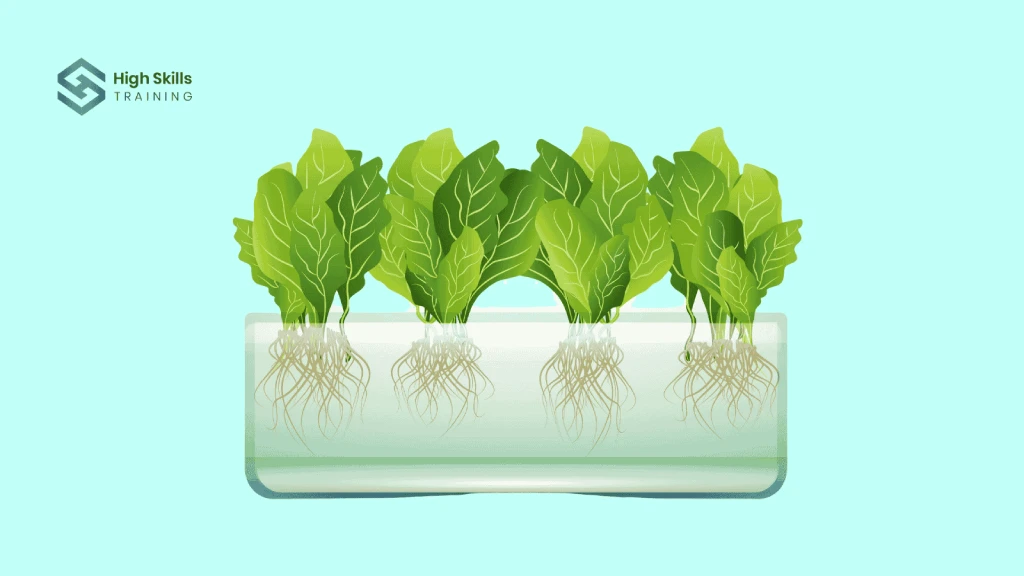
Hydroponics allows farmers to control water, nutrients, and light easily. Plants grow in trays, pipes, or containers. There is no soil mess or weeds to manage. This method supports clean growing, higher yields, and reliable harvests throughout the year.
1. Get the nutrient solution ready – Add water and the necessary nutrients that are required by plants to grow.
2. Prepare the plant containers – The plant is placed in net pots or grow trays with a growing medium.
3. Recycle safe water – Pump nutrient-rich water to the plant roots, as this would provide them with the nutrients they require.
4. The assessment of growth conditions – Light, pH, temperature, and plant food should be regulated to aim for maximal plant growth.
Hydroponics offers an opportunity for the precise control of water, nutrients, and light, which leads to enhanced growth. It is space-efficient, reduces the problems associated with soil, and offers a clean mode of production in any given environment.
Benefits include:
Hydroponics supports a wide range of crops, particularly those that thrive in controlled water environments. Leafy greens, herbs, and fruiting plants grow exceptionally well, making this method ideal for home or small-scale urban farms.
Common Crops Include:

Aquaponics and hydroponics are water and land-saving methods which use no soil. Aquaponics is founded on the waste generated by fish, which serves as a source of fertilisers for crops. Hydroponics involves feeding plants with rich water. Although both methods allow year-round growth, the systems differ in functionality.
Aquaponics involves balancing fish, plants, and bacteria. This makes aquaponics slightly complex. Hydroponics, on the other hand, only involves balancing plants and nutrients. Your decision depends on whether you want self-regulating systems or systems that promote the fast growth of plants.
In the table below, you’ll see key differences between aquaponics and hydroponics:
| Feature | Aquaponics | Hydroponics |
| System Type | Fish and plant ecosystem | Plants in nutrient-rich water |
| Food Produced | Both plants and fish | Only plants |
| Water Use | Needs a balance of fish, plants, and bacteria | Uses less water than soil but requires monitoring |
| Management | Needs balance of fish, plants, and bacteria | Needs precise nutrient and pH control |
| Complexity | Slightly complex due to living organisms | Simpler, easier to control |
| Ideal For | Sustainable, multi-purpose farming | Fast, controlled, plant-only growth |
The selection between aquaponics and hydroponics systems depends on your specific needs. Both options allow you to grow food at home, but their particular differences require your consideration. The selection process becomes critical because you have space restrictions that need to be addressed.
In addition, aquaponics is viable in case you want a self-sustaining system that not only has plants but also has fish. On the other hand, hydroponics is viable in case you want to accelerate your plants’ growth with controlled conditions.
Before starting, here are the key factors you need to consider:

Only for £59 (was £999)
Access 400+ expert-led courses for 12 months.No hidden fees. Cancel anytime.
Get Access NowStarting with aquaponics or hydroponics can feel tricky, but these simple tips make it easier:
Aquaponics systems are generally classified into three types: media-based, where plants grow in a solid medium; nutrient film technique (NFT), where water flows over roots in channels; and deep water culture (DWC), where plants float on rafts over nutrient-rich water. Each system suits different spaces and farming goals.
Aquaculture is the practice of raising fish or other aquatic animals in controlled environments for food or commercial purposes. Aquaponics combines aquaculture with hydroponics, growing fish and plants together. Fish waste provides natural nutrients for plants, while plants help clean the water, creating a sustainable, self-supporting ecosystem.
Aquaponics can fail due to poor water quality, improper balancing of fish and plant needs, or system maintenance issues. Without careful monitoring of pH, nutrients, and oxygen levels, fish may die, plants may suffer, and the ecosystem may collapse, making attention and routine checks critical for success.
Yes, hydroponically grown food is safe to eat when grown under proper conditions. Plants receive clean, nutrient-rich water without soil, reducing pests and diseases. As long as water quality, nutrient balance, and cleanliness are maintained, hydroponic produce is healthy, safe, and often grows faster than soil-based crops.
Hydroponic water should typically be changed every one to two weeks, depending on system size, crop type, and nutrient levels. Regular water replacement prevents nutrient imbalances, removes waste, and ensures optimal oxygen and pH levels, helping plants grow healthy and avoiding common growth issues.
No, fish cannot survive in standard hydroponic water. Nutrients added for plant growth may be toxic to fish. Only aquaponics systems are designed to safely support fish, balancing nutrient levels, pH, and oxygen to maintain both healthy plants and aquatic life in the same ecosystem.
Soilless farming offers reliable, effective options for producing fresh food in space-constrained environments. Aquaponics and hydroponics systems use less water while delivering better operational results and enabling environmentally sustainable agricultural methods. Understanding system operations will help select better equipment layouts and avoid early operational errors.
In the comparison of aquaponics vs hydroponics, making the right decision is based on the goals, budget, and daily participation. Aquaponics is best suited to individuals interested in a natural ecosystem and fish, whereas hydroponics is well-suited to growers who desire control, simplicity and higher growth rates of crops in an indoor or urban setting.
With proper selection of the system and best practice, beginners can produce fresh food with a sense of confidence, sustainability and success at home.

High Skills Training is a UK-based CPD training provider offering structured online courses and educational resources across health and social care, business administration, and professional development, supporting recognised standards and ongoing workforce development.
Get the latest insights, tutorials, and deep dives delivered to your inbox every week.
🔒 No spam. Unsubscribe anytime.
Learn about mushroom farming cost and profit in the UK, including startup costs, running expenses, profit margins, key factors, and ways to improve returns.
View This Blog
How to become an aviation manager in the UK? You require a Bachelor’s degree in a relevant field, industry experience, & strong leadership skills....
View This Blog
Discover what is facilities management in this clear UK guide. Learn key types, daily manager responsibilities, and how to develop essential industry skills.
View This Blog
