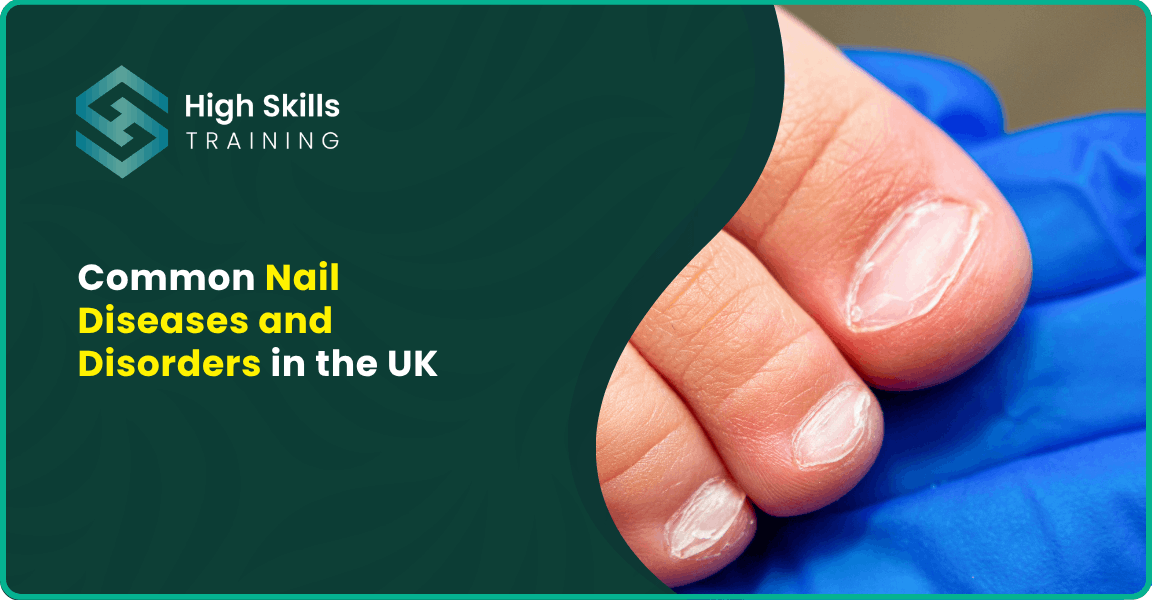
An overview of the common nail diseases and disorders in the UK, covering their causes, prevention measures and the professionals who diagnose and treat them.
Spotted a thickened toenail or a strange colour creeping across a fingernail? Nail changes are easy to ignore until they start to hurt or worry you.
What are the common nail diseases and disorders in the UK? Fungal infections, ingrown toenails, paronychia, nail psoriasis and spoon-shaped nails top the list. Most aren’t serious. The NHS notes that most nail problems are not serious and improve with self-care or treatment from a pharmacist, GP or podiatrist.
This blog will guide you to learn what these diseases and disorders are, the conditions most common in the UK, their causes, prevention measures and the professionals who treat them. Explore more.
What do nail diseases and disorders mean?
The diseases and disorders of nails are conditions that change how your fingernails or toenails look, grow or feel. That might mean a shift in colour, a change in shape or a nail that suddenly turns brittle. The NHS puts it plainly: most nail problems aren’t caused by anything serious.
Your nails change naturally too. Pregnancy can make them harder, softer or more brittle. Growth slows as you age. The real skill is telling ordinary changes from the ones that signal a health condition, and that starts with knowing what to look for.
What is the difference between nail diseases and disorders?
It comes down to cause. A nail disease develops when an infection or illness attacks the nail directly. Fungal onychomycosis and bacterial paronychia both fit here. A disorder is a structural or growth problem like an ingrown toenail or pitting, driven by injury, pressure or something happening elsewhere in your body.
NHS guidance simply calls both ‘nail problems’, but the distinction matters for treatment. Nail diseases are usually linked to infection or an underlying medical condition and may need medical treatment. Nail disorders more often stem from injury, pressure, ageing or nutrition, and need professional care to resolve the disorder.
What are the common diseases and disorders of nails?
There are eight common nail problems found in the UK, namely nail fungus, paronychia, ingrown toenail, nail psoriasis, koilonychia, Beau’s lines, clubbing and green-black nail discolouration. They may either be infections or results of trauma, skin disorders or some other illness in another part of the body. Find out how to differentiate them below:
Nail fungus (onychomycosis):
The most prevalent nail disorder in the UK. Usually affects the toenails and starts from the edge, working towards the centre of the nail, causing brittleness, discolouration and nail thickening over months.
Ingrown toenail (onychocryptosis):
Causes pain and is extremely common. The condition involves the nail growing into the skin around it, causing inflammation and redness usually of the big toe. When left untreated, an infection develops.
Paronychia:
An infection that occurs at the nail fold. This causes soreness, redness, swelling and warmth in the affected region. According to the NHS, one should see a doctor when these symptoms occur.
Nail psoriasis:
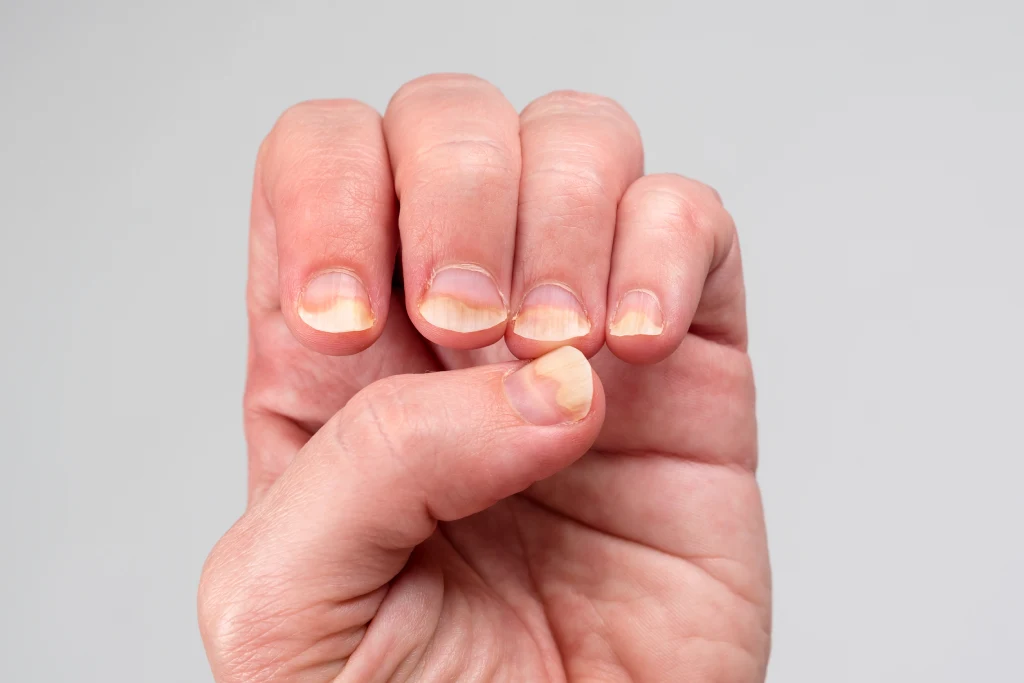
This is not the only place where psoriasis affects the body; on the nails, it appears as small pits, thickening of the nail, discolouration, or separation of the nail from its base.
Koilonychia (spoon nails):
Spoon nails develop into the inward curvature of the nails, resulting in a spoon-like appearance of the nail. This problem can be caused by repeated injury of the nail but can also occur because of iron-deficiency anaemia and other conditions.
In case of spoon nails, consult your GP. He/She may recommend a blood test to find the cause of this problem.
Beau’s lines:
Beau’s lines appear as horizontal ridges in the nail following temporary interruption of normal growth of the nail because of serious illness, high fever, surgery and physical stress. Usually, they disappear with time without any treatment.
Nail clubbing:
Clubbing of the nails needs to be checked by a GP as it might suggest chronic diseases of the heart, lungs, liver and bowels.
Green-black nails:
The green nail syndrome results from the infection of Pseudomonas aeruginosa bacteria that thrive in moist areas under the partly separated nails. This condition arises due to the prolonged presence of your fingers in water or chemicals; hence, you should dry your hands properly.
If your nails are slightly detached from the nail beds or moist, they create favourable conditions for bacterial growth.
What causes nail problems?
Online Nail Technician Diploma Course
From manicures to acrylics and nail art build real nail tech skills with this nail technician diploma.
Most nail problems are caused by six common factors, such as infection, injury, skin conditions, poor nail care, medicines or an underlying illness. In some cases, several of these factors can cause the same problem. For example, damp feet in tight trainers can cause the same fungus in athlete’s foot and spread straight into toenails.
Infections: Dermatophyte fungi cause most fungal nail infections. Warm, damp, enclosed feet give them the environment to grow.
Injury and pressure: A dropped box, a football boot a size too small, years of running. Any of these can thicken, discolour or loosen a nail. Fingernails usually take around six months to grow back fully, while toenails often take 12 to 18 months.
Skin conditions: Psoriasis and eczema all leave their marks, from pitting and ridging to a nail lifting off its bed.
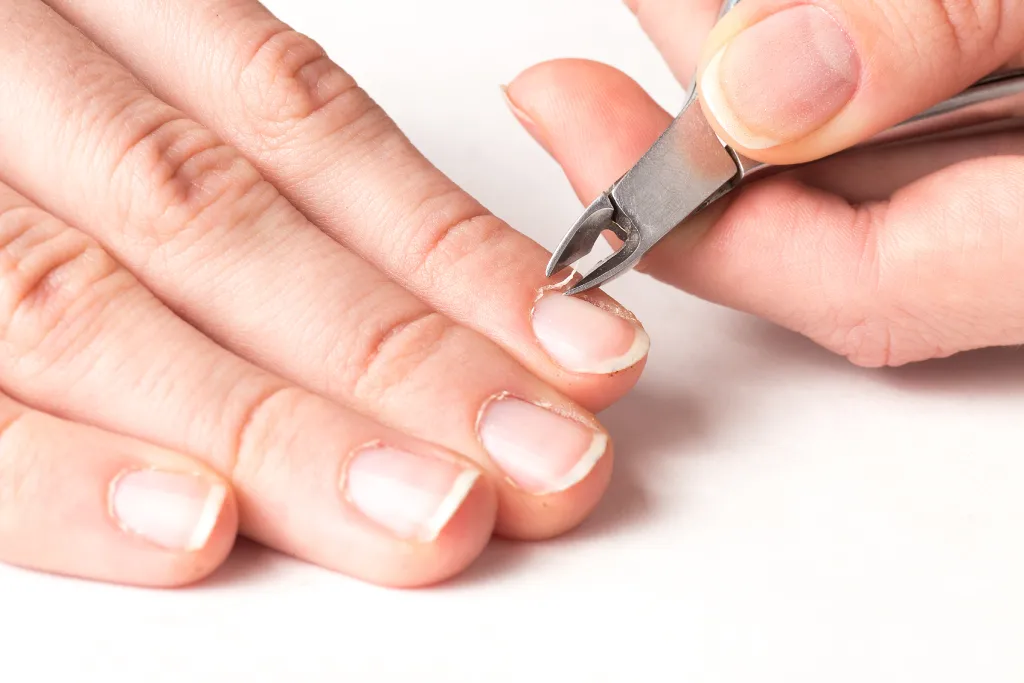
Poor nail care: Cutting down the edges instead of straight across can cause an ingrown toenail. Also, sharing clippers or files spreads fungal spores.
Underlying health conditions: Sometimes your nails speak before the rest of your body does. Anaemia, thyroid problems, diabetes and heart, lung or liver disease can all leave early signs there, so a change that refuses to grow out is worth mentioning to your GP.
Why is it important to understand nail disorders and diseases?
Knowledge about diseases and disorders of nails ensures that warning signs are noticed early on. It is not always true that any kind of changes in your nails indicate a disease or disorder or infection. Sometimes, the changes that take place can indicate an infection or skin condition and/or a disorder.
It is essential to be able to differentiate between them in order to receive proper treatment and avoid further infection. This knowledge is equally important to anyone who deals with nail care professionally. In this case, the nail technician diploma can be beneficial.
How to prevent common nail disorders?
To prevent nail disorders, you must keep nails clean, dry and trimmed straight across, glove up for wet work, wear shoes that fit and keep nail tools to yourself. These small habits block the moisture, pressure and shared spores behind the vast majority of nail problems.
The NHS recommends building these habits into your routine:
Rubber gloves whenever your hands face water or cleaning products
Nails trimmed straight across the top, never down the edges
A soft nailbrush for cleaning, rather than a sharp object
Remove nail polish regularly so you can spot changes in nail colour or texture early.
Hand cream worked into fingernails and fingertips to fight brittleness
Cool, dry feet, with shoes rotated rather than worn every day
Well-fitting footwear with room around the toes
Do not share your scissors, clippers and files
Use flip-flops in communal showers, changing rooms and gyms
Pro Tip: If an injury loosens a nail, trim it back to where it still attaches so it cannot snag and tear.
Yes, although your pharmacist is the smarter first stop for over-the-counter nail paints. When those fail, a GP can prescribe antifungal tablets for up to 6 months, usually after testing a nail clipping and checking your liver, as tablets are unsuitable in pregnancy or with liver or kidney disease.
What type of doctor treats nail problems?
Three professionals cover nail care between them. Your GP handles diagnosis, prescriptions and referrals. A podiatrist specialises in toenail troubles such as ingrown or thickened nails, and in some areas you can refer yourself without seeing a GP first. A dermatologist manages complex cases linked to skin disease.
What do B12 deficiency nails look like?
B12 deficiency can tint nails blue-grey or brown, cause dark vertical bands called longitudinal melanonychia, or leave them brittle and thin. These signs are uncommon. However, a new or changing dark band on a single nail needs urgent medical assessment, as it can indicate melanoma rather than a deficiency.
Conclusion
So, what are the common nail diseases and disorders in the UK? Fungal nail infections, ingrown toenails, paronychia, nail psoriasis, koilonychia, Beau’s lines, clubbing and green-black nails. This blog has traced each one back to its causes, from infection and injury to health conditions, and the habits that prevent them.
The biggest lesson is that your nails are a great indicator of your health condition. Grooves that grow out after illness, pitting that points to psoriasis, spoon shapes that hint at low iron. Most changes are harmless, but each one gives you a clue. If you read these signals early, you can stop small problems from becoming big ones.
So, focusing on the prevention of diseases and disorders of nails must be the top priority. Trim straight across, keep your feet dry, keep your tools to yourself and glance at your nails now and then. If something still looks wrong, contact your GP for advice and the right treatment.
High Skills Training
High Skills Training is a UK-based CPD training provider offering structured online courses and educational resources across health and social care, business administration, and professional development, supporting recognised standards and ongoing workforce development.
Weekly Newsletter
Never miss an article
Get the latest insights, tutorials, and deep dives delivered to your inbox every week.
Discover the best mushrooms to grow for beginners in the UK, from oyster kits to lion’s mane, covering growing conditions, colonisation tips and growing...
Understand Hard vs Soft Facilities Management. Explore key services, legal requirements, and integrated FM models to keep your UK business site compliant.
Learn about mushroom farming cost and profit in the UK, including startup costs, running expenses, profit margins, key factors, and ways to improve returns.