


What Is the Most Painful Stage of Sores?
Stage 2 isn't always most painful. Discover which stage of pressure sores and cold sores actually hurts most, and how to manage it.
View This BlogSpecial Deal
£11.24Any Courses
Limited Time only


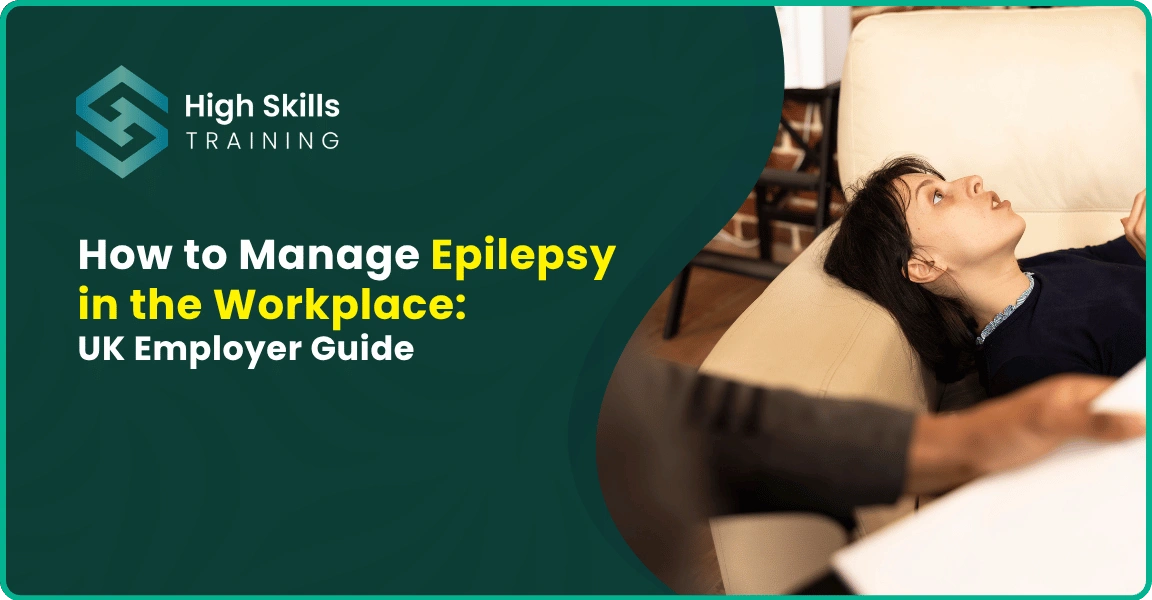
Learn how to manage epilepsy in the workplace with UK employer guidance on legal duties, reasonable adjustments, and seizure support. Read the full guide now.
Imagine one of your team members has a seizure at their desk. Do you know what to do? Most employers honestly do not. Epilepsy catches people off guard in the workplace, and that gap between not knowing and knowing is exactly where this guide comes in.
So, how to manage epilepsy in the workplace? Talk to your employee first. Find out what they go through, what triggers their seizures, and what help they actually need. Then bring in occupational health, make a few practical changes, and keep checking in. That is where it all begins.
This blog will explore UK legal duties, workplace adjustments, risk assessments, and seizure safety planning from the ground up. You will also pick up straightforward ideas that genuinely help employees with epilepsy feel safe and supported at work every day.

Forget what you think you know about epilepsy. Most people imagine someone collapsing dramatically, but that is only one small part of the picture. Epilepsy is a neurological condition that throws the brain’s electrical activity off course, and it shows up differently in every single person who has it.
Around 1 in 100 people in the UK has epilepsy. Many of them are sitting at desks, driving forklifts, and running meetings right now without any issue. Some seizures last seconds and look like nothing more than a brief blank stare. Others are more obvious. Either way, workplace safety deserves proper thought.
Here is what too many employers get wrong. They assume an epilepsy diagnosis changes everything about what a person can do at work. It usually does not. Give someone the right support and a bit of genuine understanding, and they will get on with the job just like anyone else on your team.
UK law does not leave much room for interpretation on this one. The Equality Act 2010 classifies epilepsy as a disability, which means treating someone unfairly because of it is discrimination against epilepsy, and it is against the law. Every employer in the country needs to understand that clearly.
The Act also puts a duty on employers to make reasonable workplace adjustments for any disabled person on their team. This is not something you can opt out of or decide is not relevant to your business. Skip it, and you are opening yourself up to employment discrimination claims that can get very expensive very quickly.
UK disability discrimination law sits alongside all of this and makes equal employment opportunity a right, not something handed out at an employer’s discretion. Health and safety law adds another layer of responsibility on top. Get all of it right from day one, and you protect your employee, your team, and your business in one go.

Stop guessing and start asking. The employers who handle epilepsy well are not the ones with the fanciest HR policies. They are the ones who actually sit down with their employee and have a proper conversation about what that person experiences and what they need. Everything else flows from there.
Once you understand the individual, bring occupational health in early and keep the employee involved in every decision along the way. Epilepsy is not a one-size-fits-all condition, so do not treat it like one. Get the right workplace adjustments sorted early and save yourself and your employee a lot of unnecessary stress further down the road.
A seizure action plan is simply a written guide that tells your team what to do if a seizure happens. It covers first aid steps, emergency contacts, and medication information. Write it with your employee, not just for them, because they are the only one who truly knows what they need in that moment.
Ask your employee directly how epilepsy affects their working day. Not in a formal HR meeting necessarily, just a genuine conversation. Keep whatever they share completely confidential and check in informally every couple of weeks. Small regular conversations beat one big annual review every time.
Poor sleep is one of the most reliable seizure triggers there is. If your employee is working rotating shifts or unpredictable hours, their seizure control can suffer badly. Sometimes changing their shift pattern slightly or fixing their start time makes a bigger difference than any medication adjustment their doctor could make.
Occupational health professionals are genuinely useful here, not just a box to tick. They look at the actual role, spot risks you have probably walked past a hundred times, and suggest adjustments that are grounded in real medical understanding. Get them involved early rather than as a last resort when things have already gone wrong.


Reasonable adjustments sound more daunting than they usually are. Most of the time, employers are surprised by how straightforward the changes actually turn out to be. The problem is that too many employers never ask the employee what they need and end up either doing nothing or overcorrecting in ways that do not actually help.
Start with a conversation. Ask your employee, talk to their GP if appropriate, and loop in occupational health.
Every employee with epilepsy has a different experience of the condition, so what helped someone in a previous role may be completely wrong here. Tailor everything to the person in front of you, and you will not go far wrong.
Flexible hours, proper rest breaks, and tweaks to the working environment all count. Someone with photosensitive epilepsy might need screen settings changed or overhead lighting adjusted, and that takes minutes to sort out. Even letting someone attend a medical appointment without it counting against their leave record is a reasonable adjustment worth making.
Tiredness and stress are two of the biggest seizure triggers, and flexible working knocks both of them back. For employees dealing with uncontrolled seizures, working from home part of the week can also take a lot of pressure off.
Have an open conversation, put something on paper, and make sure it works properly for both sides.
Some parts of a role genuinely do carry more risk for someone who has seizures, and pretending otherwise does not help anyone. The good news is that most roles can be adjusted without pulling the employee out of work altogether.
Sit down with occupational health, look at what the actual risks are, and find a sensible way around them together.
Coming back after a tonic-clonic seizure or a new epilepsy diagnosis is harder than most employers appreciate. A phased return takes the pressure off and lets the employee rebuild their confidence without feeling overwhelmed on day one. It also gives the team time to adjust and keeps everything ticking along without a big disruption.
The Disability Confident Employer Scheme gives employers something concrete to work toward when it comes to supporting disabled persons. Signing up is not just a badge; it comes with practical tools and guidance that actually help you do things better.
It also sends a clear message to your team and any potential employer candidates that inclusion is something you take seriously here.

A risk assessment for an employee with epilepsy should never be treated as a formality. It is a genuine look at where the real risks sit in that person’s specific role and environment. Skip it or rush it, and you are leaving both the employee and your business exposed to something that was entirely preventable.
Every workplace is different, and every employee with epilepsy brings their own triggers, patterns, and experiences to the table. That is why the employee must be part of the assessment from the very start, not consulted at the end after all the decisions have already been made. They know how their condition actually behaves better than any textbook ever could.
Follow these five key steps to carry out an effective risk assessment:

Good support for an employee with epilepsy does not sit in a policy document gathering dust in an HR folder somewhere. It lives in how you actually treat that person on an ordinary wednesday when they are having a rough week.
The culture you build around them matters far more than any process you put on paper.
Employers who genuinely get this right are not doing it to tick a compliance box. They care about the person, and it shows in everything from how they run meetings to how they respond when things go wrong.
That kind of workplace is worth something real to the employee, their colleagues, and anyone thinking about joining the team.
Here are seven key ways to support employees with epilepsy at work:
The sixty seconds after a seizure starts at work are the ones that really matter. A colleague who has had proper epilepsy awareness training handles those sixty seconds calmly and correctly. A colleague who has had no training at all tends to panic, and panic in that moment can make a difficult situation significantly worse.
Training does not have to be a big, expensive production to be effective. Epilepsy Action and the Epilepsy Society both offer solid practical resources built for real UK workplaces and real working people. Cover the types of seizures your employee might have, walk through basic first aid, and make sure everyone knows how to follow a seizure action plan when it matters.
One session is never really enough though. Staff leave, new people join, and what people learned two years ago starts to fade. Building epilepsy awareness into your regular training calendar means your team stays genuinely prepared rather than vaguely aware. That is the difference between a workplace that handles things well and one that just hopes for the best.

Only for £59 (was £999)
Access 400+ expert-led courses for 12 months.No hidden fees. Cancel anytime.
Get Access NowThe four main types of epilepsy are focal epilepsy, generalised epilepsy, combined generalised and focal epilepsy, and unknown epilepsy. Each type affects the brain differently and produces different seizure patterns. An accurate epilepsy diagnosis from a neurologist helps determine the right treatment and workplace support needed.
Common warning signs of a seizure include sudden confusion, uncontrolled jerking movements, staring blankly into space, temporary loss of awareness, and unusual sensations like tingling or dizziness. Recognising these early signs helps colleagues and employers respond quickly and follow the correct seizure action plan at work.
Five common symptoms of epilepsy include repeated seizures, temporary confusion, uncontrolled movements, loss of consciousness, and sudden emotional changes such as fear or anxiety. Symptoms vary depending on seizure type. Understanding these helps employers provide better workplace support and make appropriate, reasonable adjustments for employees with epilepsy.
Avoid saying things like “you cannot do this job” or “are you safe to work?” These comments can feel dismissive and discriminatory. Never assume an epilepsy diagnosis limits someone’s ability to perform. Focus on practical support, open conversations, and reasonable adjustments instead of making uninformed assumptions about their capability.
Long-term side effects of repeated seizures can include memory difficulties, concentration problems, fatigue, anxiety, and depression. Some people also experience cognitive changes over time. Employers should be aware of these effects when reviewing workplace adjustments and offering ongoing occupational health support to employees managing epilepsy at work.
Managing epilepsy in the workplace is something every UK employer can get right with the right knowledge and approach. Epilepsy is a common neurological condition, yet many employees still face unnecessary barriers at work. With proper support, reasonable adjustments, and open communication, every employee with epilepsy can truly thrive.
Understanding your legal duties under the Equality Act 2010 is essential for every employer. Making reasonable adjustments, carrying out risk assessments, and creating a seizure action plan protects both your employee and your business.
Epilepsy Action, the Epilepsy Society, and occupational health professionals are all there to help you. You do not have to figure this out alone.

High Skills Training is a UK-based CPD training provider offering structured online courses and educational resources across health and social care, business administration, and professional development, supporting recognised standards and ongoing workforce development.
Get the latest insights, tutorials, and deep dives delivered to your inbox every week.
🔒 No spam. Unsubscribe anytime.
Stage 2 isn't always most painful. Discover which stage of pressure sores and cold sores actually hurts most, and how to manage it.
View This Blog
Understand gas safety regulations in the UK, covering compliance duties, Gas Safe rules, landlord checks, CO alarms by nation, and penalties.
View This Blog
What is a home gas safety check? Discover what it covers, annual rules for landlords, typical UK costs, and why it protects your household.
View This Blog
