




What Is the Most Painful Stage of Sores?
Stage 2 isn't always most painful. Discover which stage of pressure sores and cold sores actually hurts most, and how to manage it.
View This BlogSpecial Deal
£11.24Any Courses
Limited Time only


Understand gas safety regulations in the UK, covering compliance duties, Gas Safe rules, landlord checks, CO alarms by nation, and penalties.
Ignoring regulations of gas safety in the UK can lead to prosecution, fines, or even worse, yet dutyholders often misunderstand what the law requires.
Gas safety regulations in the UK are set out mainly in the Gas Safety (Installation and Use) Regulations 1998. They require gas appliances, flues and pipework to be installed, maintained and used safely, with landlords arranging annual checks through a Gas Safe registered engineer.
This blog breaks down who must comply, what the Gas Safe Register means for you, your responsibilities as a landlord, and the penalties for getting it wrong. Explore more below.
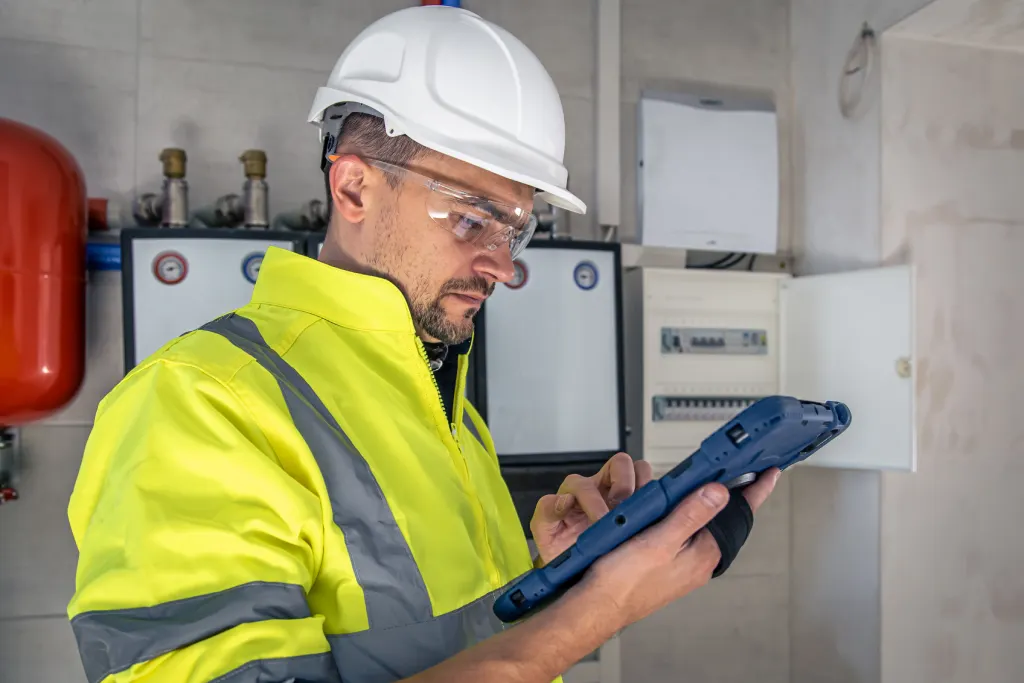
The regulations of gas safety in the UK set legal duties for anyone installing, maintaining or using gas appliances, flues and pipework. They cover who can carry out gas work, how often checks happen, and what records must be kept. Breaching them can lead to enforcement action or prosecution
The 1998 Regulations sit alongside other legislation that together shapes gas safety across different settings:
| Legislation | What it covers |
| Gas Safety (Installation and Use) Regulations 1998 | Core duties for installing, maintaining and checking gas appliances, flues and pipework |
| Gas Safety (Installation and Use) Regulations (Northern Ireland) 2004 | Northern Ireland’s equivalent legislation, closely matching the GB Regulations |
| Health and Safety at Work Act 1974 | Wider duty of care on employers and anyone controlling premises with a gas supply |
| Gas Safety (Installation and Use) (Amendment) Regulations 2018 | Flexibility on when landlords can carry out annual checks, plus updated record-keeping duties |
| Smoke and Carbon Monoxide Alarm Regulations (nation-specific) | Carbon monoxide alarm requirements, covered later in this blog |
In practice, the regulations require:
Enforcement splits by nation. The Health and Safety Executive enforces these rules in England, Scotland and Wales. Northern Ireland has its own regulator, the Health and Safety Executive for Northern Ireland (HSENI), working under closely matching legislation.
Both can inspect properties, issue improvement or prohibition notices, and refer serious breaches for prosecution, with penalties covered later in this blog.

Gas safety regulations apply to anyone responsible for a gas appliance used by someone else. This includes landlords, letting agents, housing associations and employers. Gas engineers must also comply before carrying out any work. Homeowners face lighter obligations, mainly around who they hire.
Here’s how responsibility breaks down by role:
| Dutyholder | Core responsibility |
| Landlords and letting agents | Annual gas safety checks and records for every tenant-occupied property with a gas appliance |
| Employers | Maintaining gas appliances used by staff or visitors, and using only Gas Safe registered engineers for any work |
| Housing associations | Same annual check and record-keeping duties as private landlords |
| Gas engineers | Registration with Gas Safe before carrying out any gas work, and working within their registered categories |
| Homeowners | No legal duty to check their own appliances, but must still use a Gas Safe registered engineer for any gas work |
Landlords and letting agents carry the strictest duties, since they’re responsible for appliances used by tenants who didn’t choose them and often can’t inspect for themselves. Employers hold a comparable duty for anyone using gas appliances on their premises.
The Gas Safe Register is the official list of engineers legally allowed to work on gas appliances in the UK. It replaced CORGI in 2009, and anyone doing gas work must be on it. One register covers all four UK nations.
Every registered engineer carries an ID card, and it tells you what you need to know:
Registration is category-specific, so don’t stop at checking someone’s on the register. An engineer qualified to fit a boiler isn’t automatically qualified to touch a gas cooker or fire. Check the card covers the exact job in front of you.
Before any work starts, it’s worth taking a minute to verify:
If an engineer can’t produce an ID card, or won’t show it, or isn’t registered for the work you need, stop there and find someone else.
If you want to understand how domestic gas systems work and why only qualified professionals should carry out gas work, explore our Domestic Gas Training course.
Hiring or using an unregistered engineer is a criminal offence. It also invalidates the safety of the work carried out, and can put your insurance and compliance records at risk.
Landlords must arrange annual gas safety checks on every appliance and flue they provide. A Gas Safe registered engineer must carry these out. Records must be given to tenants and kept on file. Missing any of this puts you in breach of the law.
Here’s what that looks like as a yearly cycle:
Every appliance and flue you provide has a clock running on it. It must be checked within 12 months of installation, and every 12 months after that, by a Gas Safe registered engineer.
Waiting until the last possible day is risky. You can carry out the check up to 2 months before it’s due and keep the original expiry date, giving you room to work around access issues or a tenant who’s hard to reach.
Once the check is complete, the engineer issues a Gas Safety Certificate, officially known as the Gas Safety Record (often called a CP12). This document lists every appliance inspected, the results of the safety checks, and any defects found.
A record sitting in your files isn’t enough. Existing tenants must receive their copy within 28 days of the check being carried out.
For a new tenancy, the timing is more strict. The tenant must have the record in hand before they move in, not sometime after.
Hold onto every Gas Safety Record for at least 2 years, even after a tenant has left. If a dispute or inspection arises later, this is what protects you.
Your responsibility doesn’t pause between annual visits. If a tenant reports a smell of gas, a fault, or a broken appliance, it needs sorting immediately, not filed away for the next scheduled check.
Note that a gas safety check only confirms an appliance is safe to use. It’s not the same as a full boiler service, and we cover that difference in the section below.
A gas safety check is a hands-on inspection carried out by a Gas Safe registered engineer. They work through a set process, starting with a visual look at each appliance, then testing for gas tightness, checking pressure, and finishing with a written safety record. Most checks take 30 to 60 minutes.
For a full breakdown of what each stage involves, see our guide on what a home gas safety check covers.
It’s worth remembering that a gas safety check is not the same as a boiler service. A check confirms the appliance is safe to use, while a service goes further, cleaning components and checking wear to prevent future breakdowns.
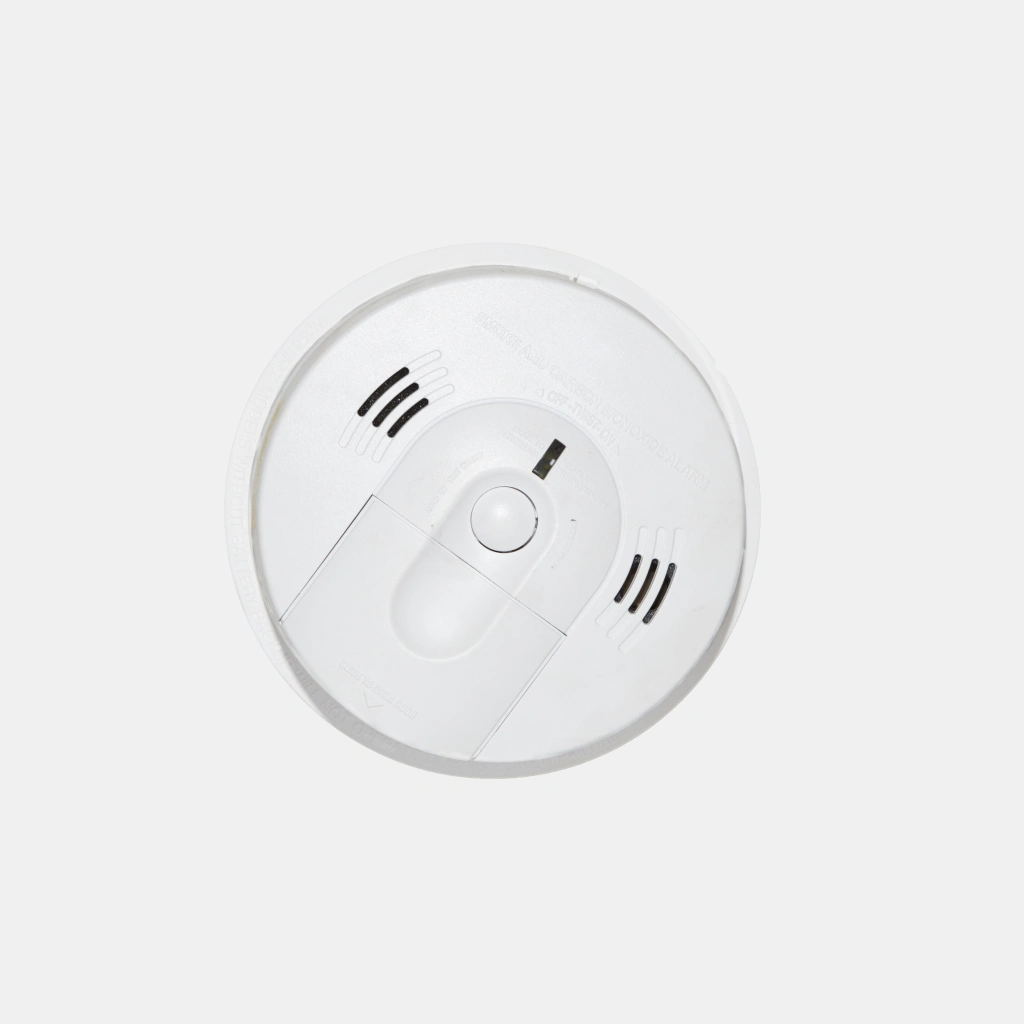
A carbon monoxide alarm is a small device that detects carbon monoxide, a gas with no smell, taste or colour that can build up from faulty gas, oil or solid fuel appliances. It sounds a warning before levels become dangerous.
Carbon monoxide alarm rules differ across the UK. Each nation has its own legislation, its own start date, and its own scope. England excludes gas cookers. Wales does not. Scotland’s rules are the strictest and apply to every home, not just rented ones.
Here’s how the rules break down by nation:
| Nation | Legislation | In force since | Where alarms are required |
| England | Smoke and Carbon Monoxide Alarm (Amendment) Regulations 2022 | 1 October 2022 | Any room used as living accommodation with a fixed combustion appliance, excluding gas cookers |
| Scotland | Scottish Government fire and CO alarm standard | February 2022 | Every home, wherever there’s a fixed combustion appliance, alongside interlinked smoke alarms and a kitchen heat alarm |
| Wales | Renting Homes (Wales) Act 2016, Fitness for Human Habitation Regulations 2022 | December 2022 | Any room with a gas, oil, or solid fuel appliance, including gas cookers |
| Northern Ireland | Private Tenancies Act (Northern Ireland) 2022 | 2022 | Privately rented homes with a fossil fuel appliance |

The England and Wales rules look similar at first glance, but the gas cooker exclusion is the key difference. In England, a room with only a gas cooker doesn’t need a CO alarm. In Wales, it does.
Scotland stands apart in scope. Its rules apply to every home in the country, whether rented or owner-occupied, not just properties let out by a landlord. It’s also the only nation requiring alarms to be interlinked, so all alarms sound together if one is triggered.
Northern Ireland’s requirement sits within the Private Tenancies Act, alongside its 2012 building regulations, which already required CO alarms for any new or replacement fossil fuel appliance installation regardless of tenancy.
For a UK-wide landlord managing properties in more than one nation, the safest approach is to meet the strictest applicable rule for each property rather than assuming one set of requirements covers all of them.
Breaching gas safety regulations can mean an unlimited fine, imprisonment, or both. Courts treat these cases seriously, since lives are at risk. Real prosecutions show this isn’t just a theoretical threat.
Here’s what enforcement can actually mean for you:
| Consequence | What it involves |
| Fines | Unlimited in both the Magistrates’ Court and the Crown Court, for offences committed since 12 March 2015 |
| Imprisonment | Up to six months (Magistrates’ Court) or up to two years (Crown Court) |
| Improvement or prohibition notices | Requiring unsafe work to stop or be corrected, issued by HSE or HSENI |
| Invalidated insurance | Landlord insurance can be voided if a claim follows a missed gas safety check |
| Possession complications | In England, a valid gas safety record is required for certain eviction routes |
For landlords, there’s a knock-on risk beyond prosecution. In England, the Renters’ Rights Act 2025 abolishes Section 21 no-fault evictions from 1 May 2026, and a valid gas safety record remains a requirement for certain possession routes. A missing or lapsed record can complicate regaining a property, on top of any criminal liability.
Enforcement also splits by nation. The Health and Safety Executive brings prosecutions in England, Scotland and Wales. Northern Ireland has its own regulator, HSENI, working under closely matching legislation and penalties.

Only for £59 (was £999)
Access 400+ expert-led courses for 12 months.No hidden fees. Cancel anytime.
Get Access NowF gas regulations govern fluorinated greenhouse gases in refrigeration and air conditioning. Great Britain applies retained Regulation 517/2014, enforced by the Environment Agency. Operators must conduct scheduled leak checks, keep records, recover refrigerant at end of life and use certified engineers. A quota system progressively restricts HFC supply.
Yes. You can keep using R410A in systems already installed, and engineers can still top them up with new gas. But since January 2025, small new split air conditioning units cannot be sold in Great Britain with R410A inside, so newer systems use lower-impact gases like R32.
Regulation 8 of the Gas Safety Regulations 1998 covers existing gas fittings. It prevents anyone from altering a building, flue or ventilation in a way that makes a gas appliance unsafe to use. It applies to builders and homeowners, not just gas engineers, and employers must ensure compliance.
No. Gas work must only be carried out by a Gas Safe registered engineer. DIY gas work is dangerous and can lead to leaks, fires, explosions or carbon monoxide poisoning. Even simple jobs like fitting a cooker count. Always check the engineer’s Gas Safe ID card before any work begins.
So, what are the gas safety regulations in the UK? They’re legal duties requiring gas appliances, flues and pipework to be installed, maintained and checked safely, enforced by the HSE in Great Britain and HSENI in Northern Ireland. We covered who must comply, the Gas Safe Register, landlord duties, CO alarm rules, and penalties.
The key lesson is that compliance isn’t just paperwork. Every rule here, from annual checks to Gas Safe ID cards to nation-specific CO alarm requirements, exists because gas failures can be silent, sudden and fatal.
If you’re a landlord, employer, or anyone responsible for gas appliances, use this as a prompt. Check your next appointment is booked, confirm your engineer’s registration covers the job, and match your CO alarms to the rules for that nation. Building this into your routine protects everyone relying on you.

High Skills Training is a UK-based CPD training provider offering structured online courses and educational resources across health and social care, business administration, and professional development, supporting recognised standards and ongoing workforce development.
Get the latest insights, tutorials, and deep dives delivered to your inbox every week.
🔒 No spam. Unsubscribe anytime.
Stage 2 isn't always most painful. Discover which stage of pressure sores and cold sores actually hurts most, and how to manage it.
View This Blog
What is a home gas safety check? Discover what it covers, annual rules for landlords, typical UK costs, and why it protects your household.
View This Blog
Medication administration procedure guide for UK care workers. Master the 8 Rights framework, step-by-step process, and prevent errors in care homes.
View This Blog
