Is the Care Certificate a Qualification? Complete Guidelines
Last updated: January 20, 2026
16 minutes
Is the Care Certificate a qualification? Know what it is, how it’s recognised, and why it matters for starting a career in health and social care.
The Care Certificate is a set of standards developed for the health and care support workforce to support others. It defines about 16th the knowledge, skills and behaviours expected of specific job roles in health and social care. Whereas, qualification means passing an examination or completing an official or regulated course.
So, is the Care Certificate a qualification? The Care Certificate does not act as a formal qualification. As well as it is not mandatory for caregivers. Rather, it confirms that a caregiver has the essential skills, knowledge, and behaviours needed to work safely and effectively, but it does not carry academic credits.
In this guide, we will discuss what the Care Certificate is, what standards are discussed in the Care Certificate, Who Needs the Care Certificate, how to get a Care Certificate and more.
What is the Care Certificate?
The Care Certificate is a framework to ensure that all support workers have the same introductory skills, knowledge and behaviours to provide compassionate, safe and high-quality care. It also forms an essential part for beginners in health and social care, as well as those who are already working in this sector.
The certification was developed collaboratively by Skills for Care, Skills for Health, and Health Education in the UK. According to Skills for Care, it is “a nationally agreed set of standards that outline the knowledge, skills, and behaviours which are expected of staff working in health and social care roles.”
The Care Certificate is an essential element to ensure that all new care workers receive consistent training and support a person during their induction, understanding their roles, helping employers meet the legal requirements and essential standards set by the Care Quality Commission (CQC).
What are the Care Certificate standards?
The standards of care certificate defines the core knowledge, skills and behaviours of a caregiver. The standards also express the expectations of health and social care workers entering the sector. These standards were updated in March 2025 to reflect changes in care practice and to align with present care practices.
There are 16 Care Certificate standards that cover essential areas of practice every care worker should understand and demonstrate. These include
1. Understand your role
Before giving care, you should know what your job duty is. It means where your responsibilities begin and end. As well as your role in the care workplace, and how your work contributes to providing quality care within an organisation. Knowing employer policies, legal boundaries, teamwork, and safe practice is the main focus here.
2. Your personal development
You should also focus on your ongoing learning and building competence through feedback. Regular practice, supervision, and training planning ensure your personal development. If you regularly set and review personal goals, it will help improve your confidence and performance in care delivery.
3. Duty of care
Act in ways that your ethical and legal responsibilities help to protect people’s well-being and rights. You should recognise risks, raise concerns, speak up about issues, and take actions that prevent harm
4. Equality, diversity, inclusion and human rights
You should treat every individual fairly and with respect. You should also recognise and value their differences in culture, belief, age, ability, and identity. When you support people’s rights and challenge discrimination, it will ensure inclusive, equitable care for all.
Health and Social Care Courses
Learn about patient care with Health & Social Care Courses
It means that you should customise your support based on individuals. You should also focus on their personal preferences, values, and goals instead of applying a one‑size‑fits‑all approach. This means you should work actively, involving personal preferences.
6. Communication
Use clear, appropriate, and effective words for communicating with people. It means the caregiver should listen actively, adapt to people’s needs, and share accurate information. By doing these, he can promote understanding and build trust.
7. Privacy and dignity
You should be conscious of people’s personal space, confidentiality, and self‑respect in all interactions. So, you should ensure dignity, which is upheld during personal care, decision‑making, and everyday routines.
8. Fluids and nutrition
Firstly, you should understand individuals’ needs and dietary preferences, then serve, promote, and support them based on their need for healthy hydration and nutrition.
This also includes understanding signs of dehydration or malnutrition and facilitating meals with respect and sensitivity.
9. Awareness of mental health, dementia and learning disabilities
Dementia and learning disabilities, that affect people’s behaviour and communication. Firstly, recognise and identify their mental health issues. After that, you should adapt care approaches to support their comfort, independence, and well-being.
10. Safeguarding adults
Safeguarding means knowing how to identify and respond to signs of harm, abuse or neglect in adults. You must be familiar with reporting procedures and protective actions. Because you have a role in keeping vulnerable adults safe.
11. Safeguarding children
As a child caregiver, you should always be alert to indicators of harm or risk in children and know the responsibilities and pathways for safeguarding. This also includes understanding child protection frameworks and reporting concerns promptly.
12. Basic life support
You must have some knowledge of basic principles of first aid and emergency response. As well as keep some idea about CPR and procedures for assisting someone in crisis. It means learn how to act confidently and safely in life‑threatening situations until more advanced help arrives.
13. Health and safety
Caregivers must ensure that they provide a safe environment for service users, colleagues and themselves. For that reason, understanding risk assessments, safe equipment use, infection control, fire procedures, and hazard prevention is essential. They should also comply with employer policies and legal requirements to reduce accidents and harm.
14. Handling information
Handling information is crucial. It means record, handle, store, and share personal or clinical information accurately, confidentially, and securely and without any change. Respect data protection laws and ensure information supports continuity of care and safeguarding obligations.
15. Infection prevention and control
If youunderstand how infections spread and increase, you can adopt precautions to prevent and control infection, including correct hand hygiene, use of PPE, cleaning, and waste disposal. This protects people receiving care, staff and the wider community.
16. Awareness of learning disability and autism
Recognise and master how learning disabilities and autism can affect people’s communication, sensory experience and behaviour. And apply the lesson into inclusive strategies, adapt care support, and promote independence. Because individuals have unique needs.
These standards help ensure care workers have the fundamental skills. They can act as professionals & support for further development within the care sector.
Is the Care Certificate a qualification?
A care certificate is basically not a formal qualification. The Care Certificate is made up of a series of standards. Those who work in health and social care, including healthcare assistants and care support workers, need to complete any of the 16 standards.
The Care Certificate is not considered an official qualification, such as a diploma, NVQ, or degree, by the national awarding agencies in the UK. It also does not carry any academic credits or official certification.
But the care certification standards will ensure that caregivers have the knowledge and experience to ensure the safety of care receivers. It may also perform as a stepping stone for further qualifications. It is an important foundation for professional career growth.
The difference between the Care Certificate and formal Qualifications
There are so many differences between the Care Certificate and formal qualifications. But the most crucial differences are:
Features
Care Certificate
Formal Qualifications (e.g., Level 2/3 Diploma in Health & Social Care)
What is it
A basic training programme that introduced some skills to caregivers.
A complete, accredited course recognised nationally.
Purpose/ Objective
It ensures that a caregiver has some essential skills to work safely in care.
It ensures that a caregiver has detailed theoretical and practical knowledge about caregiving.
Skills Covered
It covers Core areas like duty of care, communication, safeguarding, infection control, health & safety, basic life support, person-centred care, and more
It covers wider learning, including all Care Certificate topics plus management, leadership, advanced care practice and more.
Regulation
Not officially regulated by government qualification bodies
Officially regulated by awarding bodies (like Ofqual) and nationally recognised
Certificate Issued By
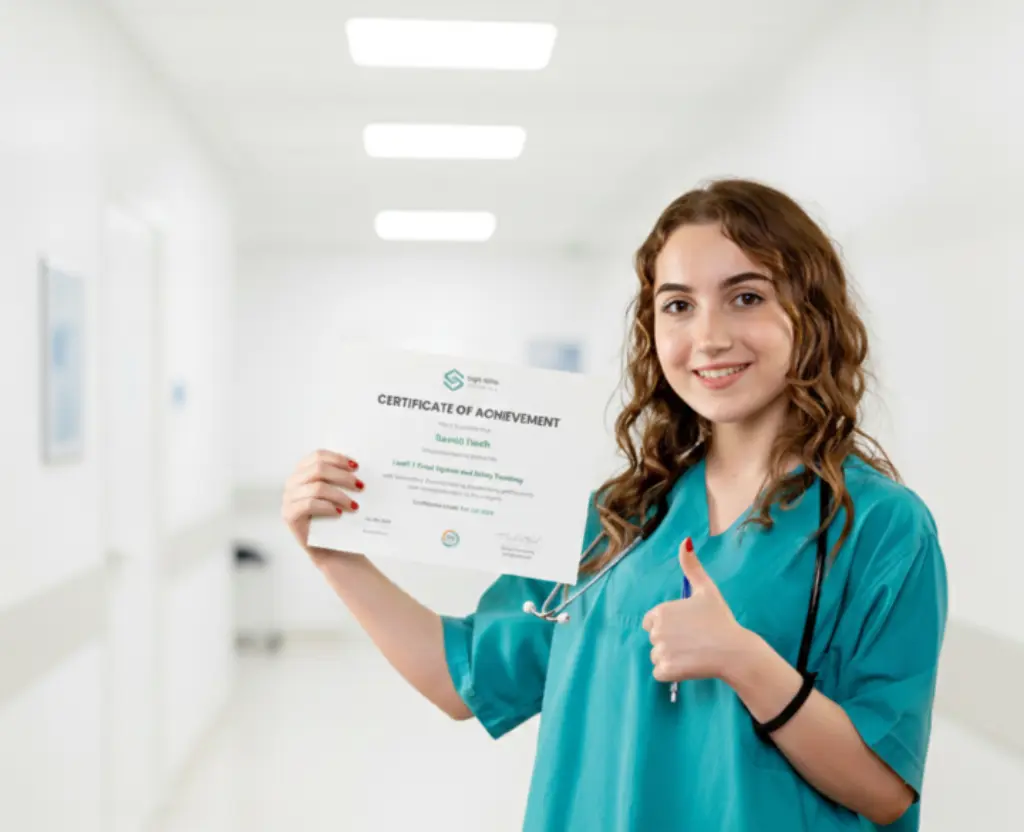
Your employer will give you the certificate after you meet all the standards.
Awarding body, college or any institution after completing all required assessments.
Career Impact
It shows that you are ready to work in the care sector.
It helps you get promoted, take on senior roles, or specialise in health & social care.
Who provides the care certificates?
The Care Certificate can be awarded by employers of any healthcare support or care workers who complete all the standards. It is also given by only the organisation that employs a healthcare support worker or adult social care worker.
The Care Certificate is also provided by training providers, or registered care organisations, and Workplace Assessors who support health and social care workers.
The authorised party assess caregivers and their completed care standards, whether they met the care standards or not. After fulfilling all requirements, the authorised party signs or gives a care certificate. Caregivers are also encouraged to use the national Care Certificate template when awarding it to workers.
Care Cetificate Course
Implement duty of care and person-centred practices with Care Certificate Course
The Care Certificate is widely recognised across the UK, as the standards provide the necessary learning for the induction of health and social care workers. The care certificate is supported and promoted by Health Education England (HEE) and Skills for Care.
The National Health Service (NHS) also recognises the Care Certificate for healthcare assistants, support workers, and other clinical staff as part of mandatory induction programmes. Similarly, the Care Quality Commission (CQC) acknowledges the certificate as evidence of staff competence.
Employers across the UK care sector, including hospitals, nursing homes, and other care providers, also recognise the certificate as proof that a worker has the essential skills and knowledge to provide safe, compassionate care.
Who needs the Care Certificate?
The care certificate is for all caregivers. It means the Care Certificate should be completed by those who are directly engaged with patient care. The care certificate is also for care staff who are beginners or already working in care roles.
If you want to play some roles that are not fully clinical but support care delivery, such as catering staff in hospitals or administrative staff, you also need a care certificate. To work directly with patients or volunteers in care settings, you also have to learn the Care Certificate standards.
How to get a Care Certificate?
A caregiver can achieve the Care Certificate by combining learning theory and practical skills in a real care setting. Because his/her skills and knowledge guarantee safe, compassionate, and person-centred care for care receivers.
To get a care certificate, a caregiver should take real-life training or online training. For real-life training, one can take training from Care homes, home care agencies, hospitals, and support service providers. Many NHS and private healthcare organisations also offer in-house Care Certificate training.
A caregiver can be a certified caregiver by taking online courses from accredited online care training providers and health and social care training websites like High Skills Training.
Why was the Care Certificate needed to do a job in the care sector?
Caring is not just doing a job; it’s a responsibility to protect and empower individuals who need support. A Care Worker provides daily assistance, supervision, and emotional support to individuals who are vulnerable, weak, or disadvantaged.
Caregivers need patience, focus, and emotional resilience to provide effective care. The care certificates ensure that anyone, new or existing caregivers in the health and social care sector, has the essential skills and knowledge to support vulnerable people confidently.
A caregiver needs care certificates to demonstrate that they are competent to perform their role safely and confidently. It means they can protect and support both themselves and the people. It also ensures that they can perform their role in a good way. Because they have specific training and skills tailored to the individual workplace.
Is the Care Certificate mandatory for care workers?
Although we know that a care certificate is required for care workers, it is not mandatory. But many organisations or care receivers want to see the certificate to ensure safety.
The certificate is considered a standard for giving care. ensures that you have some knowledge and skills that are required to provide safe, high-quality and effective care.
If you want to do a job in the care sector, completing the Care Certificate can make it much easier to get a job. It also gives workers confidence in their role and reassures service users and their families that staff are trained to a recognised standard.
When did the Care Certificate become a legal requirement?
In April 2015, the Care Certificate was first introduced. It was a direct response to the Cavendish Review (2013).
The Cavendish Review was about the poor training and support of healthcare assistants and social care workers. The review was given after the Francis Inquiry. Theyfound serious problems with care at the Mid-Staffordshire NHS Trust.
To improve training, the Cavendish Review made some suggestions. The Care Certificate followed these suggestions and put them into action.
How is the Care Certificate assessed?
Assessment of the care certificate is done by a competent assessor appointed by the employer. The assessment is done based on real work situations, not just theory or online tests. So, learners can show that they can apply their skills in the workplace.
The assessor observes the learner performing tasks, reviews completed workbooks, and discusses practical scenarios to check understanding. This ensures that learners can perform their skills consistently and safely while working in any care or services sector.
Learners must complete the care course and be assessed on all standards before they can receive the Care Certificate. Carers must show genuine and recent evidence of experience. After revealing that if the assessor is satisfied that all outcomes have been met, the employer signs off and awards the certificate.
Benefits of completing the Care Certificate & demerits of not completing the certificate
You get a clear concept by understanding the benefits of completing the Care Certificate & the demerits of not completing the certificate. If you get the right concept, you can make the right decisions for your career.
Benefits of completing the Care Certificate
The benefits of care certificates cannot be described in a few words. But to make the right decision about your career, you should know these:
1. Better job prospects & confidence
If you complete the Care Certificate, it shows employers that you have the essential knowledge and skills needed to work safely in health and social care. It makes you more employable and credible as a care worker. It also builds confidence, because you understand key care principles and how to apply them in real practice.
2. Improved quality of care
To get a certificate, you learn in key areas such as communication, safeguarding, infection control, and person‑centred care, which makes you more proficient in caregiving. This indicates you are better prepared to care for people safely and respectfully. It leads to better outcomes and increased satisfaction for those you support and their families.
3. Foundation for career growth
The Care Certificate is a stepping stone for further learning and career development. It works as a foundational step. Once completed, many care workers go on to pursue formal qualifications such as Level 2 or Level 3 Diplomas in Health and Social Care. It also helps you take on more responsibility at work and builds a strong base if you want to specialise later.
4. Helps employers meet standards
If you have the certificate, it means you have taken some care courses or training. It indicates that you can contribute in the workplace by maintaining consistent care standards. Employers benefit by having a well‑trained, confident workforce.
Demerits of not completing the Care Certificate
Care certificates ensure your expertise in a specific working sector. But having no care certificate indicates that you have no experience or skills. Because your words are not credible to trust you. If you don’t have a care certificate, you may face some problems, such as:
1. Limited autonomy at work
If you don’t get or finish the Care Certificate, you may still be able to work in care, but only under supervision. Most employers won’t let you work independently until all standards are completed. This can limit your duties, responsibilities, and opportunities on the job.
2. Slower career progression
When you don’t have the certificate, you may miss out on opportunities for advancement. Employers want to give extra duties, higher pay, or leadership roles to staff who can show employers they fully understand core care principles.
3. Reduced confidence & skill Gaps
When you do not complete the certificate, you might lack important knowledge or skills. As well as you feel less confident when handling care tasks. It can also show you’re less prepared to spot risks, protect people from harm, or deliver high‑quality person‑centred care.
Frequently Asked Questions
Is a care certificate the same as an NVQ?
No, care certificates are not the same as NVQ, because care certificates just ensure caregivers’ short-term skills and knowledge. But NVQ is a professional diploma qualification for long-term career development.
Do you have to redo the Care Certificate if you change jobs?
No, you do not usually have to redo the Care Certificate if you change jobs. The Care Certificate is designed to be portable. If you have already completed the Care Certificate and can provide evidence (such as a certificate or portfolio), you need not redo the certificate.
Is the Care Certificate enough to start a Care career?
Yes, the Care Certificate is enough to start a career in caregiving, especially for entry-level roles in health and social care. It ensures the basic knowledge and practical skills needed to work safely and confidently, such as communication, safeguarding, infection control, and person-centred care
Can the Care Certificate lead to further qualifications?
Although the Care Certificate is not a formal qualification, it can lead to further qualifications. It plays a foundational role in the care sector, which leads to further qualifications.
Conclusion
When starting your career in health and social care, a care certificate is necessary. So, a question may come into your mind: Is the Care Certificate a qualification? The fact is, the care certificate is not a formal qualification.
But it is a highly respected industry-standard certificate that ensures new care workers have the essential skills and knowledge needed to provide safe, compassionate, and confident care from day one.
Completing the Care Certificate Standards shows employers that you are ready, competent, and trustworthy. It’s one of the smartest present investments by which you can make a great change in future, a rewarding career in health and social care.
High Skills Training
High Skills Training is a UK-based CPD training provider offering structured online courses and educational resources across health and social care, business administration, and professional development, supporting recognised standards and ongoing workforce development.
Weekly Newsletter
Never miss an article
Get the latest insights, tutorials, and deep dives delivered to your inbox every week.
Advance your career by understanding Is CPD Certification Recognised in UK? Explore how CPD accreditation supports learning and career development. Read this guide.
Grow your care career with confidence! Explore the Best online training for care workers UK with accredited courses, flexible learning, & trusted certificates.