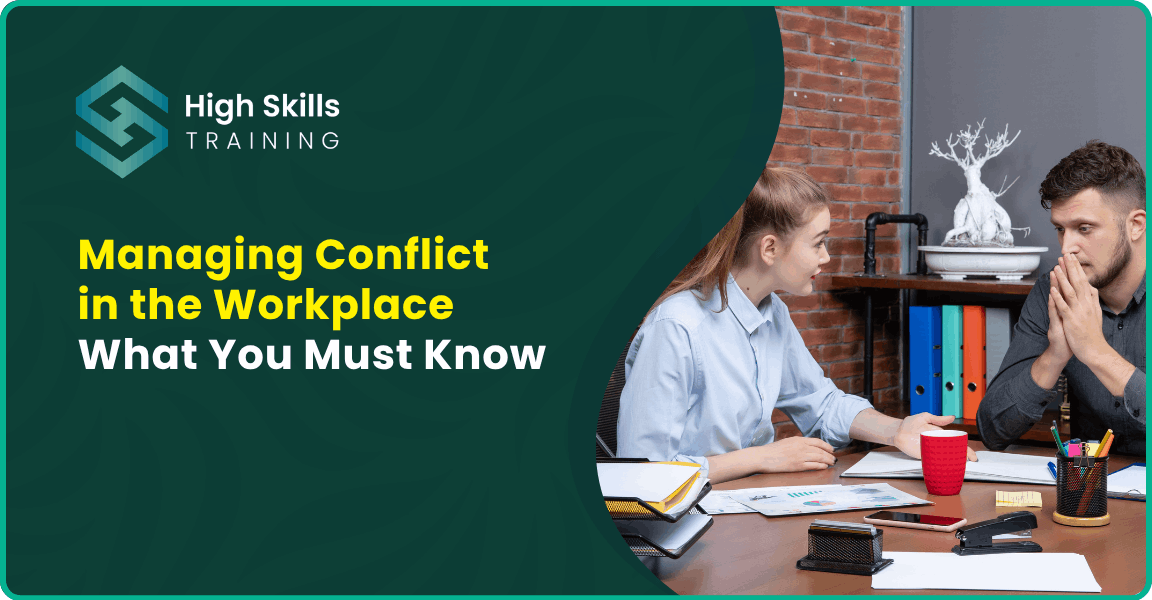
Managing Conflict in the Workplace: What You Must Know
Last updated: June 1, 2026
11 minutes
Managing Conflict in the Workplace effectively improves communication, teamwork, and productivity. Learn causes, benefits, strategies, and manager tips.
People in every workplace have different personalities, opinions, and ways of thinking, so conflict is bound to happen. When handled well, it can improve teamwork and communication.
So, what is managing conflict in the workplace? According to CIPD’s 2020 report, it involves addressing conflicts between employees in a balanced, professional manner. This includes identifying the problem early on, encouraging communication, and facilitating compromise where everyone wins.
In this article, you’ll learn what workplace conflict is, why it happens, real examples, and simple ways to manage and resolve it for a more positive, productive workplace.
What is managing conflict in the workplace?
Managing workplace conflict involves a series of important steps that help identify, address, and resolve issues effectively.
Here is a brief list below:
Understanding the reason for the conflict Finding out the root reason behind the conflict, such as communication gaps, role confusion, or personality differences.
Encouraging open communication Allowing all parties involved to express their views respectfully and honestly.
Solving the problem collaboratively Working collaboratively to find fair and practical solutions that satisfy everyone involved as much as possible.
Learning from the situation Using the experience to improve communication, teamwork, and prevent similar conflicts in the future.
Why Conflict Resolution is Important in the Workplace?
Poor conflict resolution in the workplace can seriously hinder everyday activities. Work processes become unproductive; employees may lack enthusiasm; the work environment becomes very stressful.
Nevertheless, proper conflict resolution leads to quite opposite consequences. Employees begin to comprehend each other better; teamwork becomes more effective; and the overall work environment becomes much more pleasant.
Conflict resolution has a very important role in the development of a positive, productive, and professional work environment. It will enable organisations to improve teamwork, build relationships, and minimise stress levels within the place of work.
Let’s take a detailed look at the importance of conflict resolution in the workplace:
Improved communication It will encourage the open, clear, and proper exchange of information among employees.
Higher productivity The efficiency of employees increases as a result of minimised distractions and workplace stress.
Reduction of stress A healthy work environment is established as a consequence of professional conflict resolution.
Increased morale of employees Employees feel recognised as well as appreciated after having their grievances heard.
Enhances leadership skills and decision-making Conflict resolution skills enable managers to create high-performance teams and make sound decisions.
Low staff turnover rate Job satisfaction will increase as a consequence of effective management of conflict.
Building a positive workplace culture Organisations which successfully resolve conflicts encourage respect and cooperation.
How to manage conflict in a workplace?
The ability to manage conflicts will not only help keep professionalism but also improve the teamwork skills of employees. Below are listed six methods to deal with conflicts at work:
1. Deal With Conflict As Soon As Possible
Conflicts should be addressed as soon as they appear instead of letting them sit for too long. When issues are ignored, they usually grow and start affecting daily work and team mood.
Handling things early helps stop small misunderstandings from turning into bigger problems. It also keeps the workplace more stable and less stressful for everyone involved.
2. Ensure Open Communication
People should feel free to talk about issues without fear of being judged or ignored. Open communication makes it easier to understand what’s really going on.
When employees share their concerns early, many problems can be solved quickly. It also builds trust and helps avoid confusion in the team.
3. Practice Active Listening
Active listening involves listening attentively as the other person talks rather than just waiting for an opportunity to speak. Active listening makes one feel valued.
It becomes easy to appreciate each other’s viewpoints once both parties listen effectively. This will create harmony and enable the creation of practical solutions.
4. Understand The Cause
Before trying to fix a conflict, it’s important to understand what actually caused it. Sometimes the real issue is not what it looks like on the surface.
It could be poor communication, unclear roles, or even small misunderstandings. Finding the root cause helps prevent the same problem from happening again.
5. Focus On Finding Solutions
Rather than engaging in finger-pointing, it would be best for both parties to concentrate on finding ways to resolve the problem.
Being solution-oriented promotes cooperation between the two parties because both can make efforts to move forward rather than dwell on the problem itself.
6. Following Up Post-resolution
After a conflict is resolved, it’s important to check if things are actually working well. Sometimes issues can come back if nothing is followed up on.
A simple follow-up shows that the problem was taken seriously. It also helps ensure the workplace stays positive and balanced going forward.
How to resolve conflict in the workplace as a manager?
Managers play a critical role in maintaining a healthy, productive workplace, and strong leadership is a key part of that. Conflict between employees is unavoidable in most organisations, but how a manager leads in those moments can decide whether things improve or get worse.
Good leadership helps managers stay calm, fair, and focused when handling conflict. It’s not just about stopping arguments, but about understanding the real cause, encouraging honest communication, and guiding employees toward a professional way forward.
Below is a detailed guide on how managers can resolve workplace conflict effectively.
1. Identify Conflict at Its Early Stage
It is essential for any manager to know how to identify conflict at an early stage because workplace conflict may start very mildly but can grow over time if not identified.
Indicators of workplace conflict include:
Suddenly broken communications
Passive aggressiveness
Lack of teamwork or collaboration
Decline in performance
Regular conflicts or misunderstandings
High absenteeism or bad morale
Early detection will help to prevent a minor issue from becoming a bigger workplace conflict.
2. Stay Neutral and Objective
It is important for managers not to be quick to take sides in the case of any conflict among their employees. This will make them see things in an objective manner.
Some of the ways in which managers can remain neutral include:
Staying calm in conversation
Not reacting emotionally
Concentration on facts and not assumptions
Treating everyone politely
Listening without judgment
Neutrality will promote effective communication.
3. Understand the Reason behind Workplace Conflict
Most workplace conflicts occur due to other underlying factors and thus are symptoms and not the actual cause of the conflict.
Common causes of workplace conflict are:
Poor communication
Unclear roles
Personality conflict
Imbalance in workload
Interpersonal competition
Leadership misunderstanding
Culture and values difference
Understanding the source of the conflict makes it easier to find long-term solutions instead of temporary fixes.
4. Talk to the Employees Personally
Prior to gathering the employees, managers should talk to each one personally in order to get an understanding of their point of view and concerns without them being intimidated.
In a personal talk:
Give employees space to say what they think freely
Ask employees open-ended questions
Clear up any misunderstandings
Get facts on both sides of the issue
Identify any emotional problems that employees have
These steps help managers learn all about the problem.
Managing Difficult Conversations Training
Improve your communication to manage difficult situations in the workplace.
After the manager gets an understanding of the issue, he/she should arrange a structured meeting among employees.
The meeting should:
Be held in a confidential and neutral atmosphere
Involve communication without interruptions or yelling
Provide equal opportunity to everyone to share opinions
Stick only to discussing the problem
Involve listening actively by everyone
Managers should guide the discussion while ensuring professionalism is maintained throughout.
6. Set Rules for Effective Communication
Without setting boundaries, a conflict meeting might become too emotional. Managers should establish rules before starting the discussion.
Some ground rules might include:
No interrupting
Not putting anyone down
Communicating with respect
Focusing on finding solutions
Being professional
Taking turns speaking
Clear communication rules help create a safer and more productive discussion environment.
7. Focusing on Solutions
Conflicts require that a manager not take sides and not try to establish who the winner will be. Rather, he needs to create solutions that will benefit future cooperation between the staff members.
Some potential solutions could include:
Clarification of responsibilities
Adjustment of workload
Better communication process
Creating new expectations
More training
New behaviour standards
A manager should strive for cooperation and allow employees to participate in creating a solution.
8. Apply Emotional Intelligence
Good managers apply emotional intelligence to recognise the emotions, reactions, and communication style of their subordinates when dealing with conflicts.
Emotional intelligence involves:
Self-awareness
Empathy
Patience
Listening skills
Emotional control
Nonverbal communication skills
People tend to cooperate better when they are aware that someone understands them.
9. Documentation for Significant Conflicts
For some serious conflicts occurring at the workplace, a manager should keep all necessary documents.
These can include:
Dates of the meetings held
Issues discussed
Agreed upon solutions
Behavior expectations
Follow-up actions
Proper documentation protects both employees and the organisation if future issues arise.
10. Engage HR If Necessary
Sometimes, there is a need for an outside expert when resolving some conflicts, particularly when such involve:
Harassment
Discrimination
Bullying
Threats
Violations of policy
Legal issues
HR specialists can assist in ensuring that organisational practices, as well as labour legislation, are complied with in these circumstances.
11. Follow Up After Resolving Conflict
One conversation is insufficient for conflict resolution; managers must make sure that the process continues and the results of it are achieved.
Follow-up measures include:
Assessing employees’ welfare
Evaluating work-related communications
Observing behaviour at the workplace
Providing further assistance
Encouraging cooperation
Regular follow-up helps to avoid recurring conflict.
12. Create Positive Workplace Culture
Besides managing conflicts, preventing them is another important task. Managers should work on establishing positive relations based on mutual respect and collaboration in the workplace.
This can be done through:
Open communication
Recognizing employee contribution
Conflicts prevention workshops
Diversity & inclusion
Workplace expectations
Setting an example
A positive workplace culture reduces tension and strengthens team relationships over time.
Examples of Conflict in the Workplace
Workplace conflict can take place due to various reasons, and knowledge regarding different types of conflicts is useful for effective management of such situations. Five common workplace conflicts are presented below:
1. Interpersonal Conflict
This kind of conflict takes place between two or more employees as a result of misunderstanding, communication issues, etc. This kind of conflict is considered to be one of the most frequent sources of conflict in workplaces.
As a result, the following things happen:
Personal disputes
Communication problem
Difference in working methods
Lack of cooperation
2. Task-Based Conflict
Task-based conflict emerges as a result of a disagreement between the employees related to work methods, time frames or tasks themselves.
The following things happen due to task-based conflict:
Differences in approaches to task completion
Conflict regarding responsibilities
Disagreement on time frame or goal setting
Disputes concerning decision-making
3. Leadership Conflict
Leadership conflict refers to the conflicts which emerge as a result of a clash between employees and managers or other supervisors. So this is why managers need to improve their leadership skills to mitigate this issue.
Problems you will face during leadership conflict are:
Problematic instructions from management
Disagreement on employee expectations
Problems with micromanagement
Dispute with regard to leadership support
4. Value-Based Conflict
The value conflict happens if employees hold different values, ethics, cultures, or even professional values which affect interactions in the workplace.
Culture clashes
Ethical clashes
Differences in personal beliefs
Conflict of attitudes in the workplace
5. Role Conflict
This happens when job roles and responsibilities are not clearly defined, and employees perceive some overlapping of their roles and responsibilities.
The 5 C’s of conflict management are Communication, Collaboration, Compromise, Consistency, and Control. They focus on expressing ideas clearly, working together to find solutions, making fair adjustments, applying unbiased decisions, and staying calm during disagreements. Together, these principles help resolve workplace conflicts effectively and maintain a positive professional environment.
What are the 5 strategies for managing conflict?
The 5 strategies for managing conflict are avoiding, accommodating, competing, compromising, and collaborating. Avoiding delays, dealing with the issue, accommodating prioritises others’ needs, competing focuses on winning, compromising seeks a middle ground, and collaborating works to find a solution that fully satisfies all parties involved in the conflict.
What are 4 words for conflict?
Four simple words for conflict are: disagreement, argument, fight, and clash. These all describe situations where people have opposing views or are in trouble with each other.
Conclusion
Managing Conflict in the Workplace is not about eliminating disagreements completely, but about handling them in a fair and constructive way. Organisations that resolve conflict effectively can build stronger teams, improve workplace relationships, and create a more positive environment where employees feel respected, motivated, and supported.
Moreover, Managers and leaders play an important role in managing conflict effectively. When employees observe that conflicts are managed objectively, it encourages trust within the organisation and reduces the likelihood of future conflict escalation.
High Skills Training
High Skills Training is a UK-based CPD training provider offering structured online courses and educational resources across health and social care, business administration, and professional development, supporting recognised standards and ongoing workforce development.
Weekly Newsletter
Never miss an article
Get the latest insights, tutorials, and deep dives delivered to your inbox every week.
Discover the best mushrooms to grow for beginners in the UK, from oyster kits to lion’s mane, covering growing conditions, colonisation tips and growing...
Understand Hard vs Soft Facilities Management. Explore key services, legal requirements, and integrated FM models to keep your UK business site compliant.
Learn about mushroom farming cost and profit in the UK, including startup costs, running expenses, profit margins, key factors, and ways to improve returns.