




What Is the Most Painful Stage of Sores?
Stage 2 isn't always most painful. Discover which stage of pressure sores and cold sores actually hurts most, and how to manage it.
View This BlogSpecial Deal
£11.24Any Courses
Limited Time only


Understand the PEG feeding procedure, manage feeding tubes safely at home, and prevent complications effectively. Continue reading.
PEG (Percutaneous Endoscopic Gastrostomy) is the most reliable alternative method for providing long-term nutrition when oral intake isn’t possible. In the UK, tube feeding supports around 40,000 adults and children who cannot eat or drink enough by mouth.
The PEG feeding procedure involves inserting a soft tube into the stomach through the abdominal wall using endoscopic guidance. This allows liquid nutrition, fluids, and medications to be delivered directly into the stomach, ensuring safe, long-term nutritional support for patients with swallowing difficulties.
At the end of this blog, you’ll understand clearly about PEG feeding, who needs this, the right steps, post-care tips and advice for managing it confidently at home or in hospital settings. Let’s move forward.
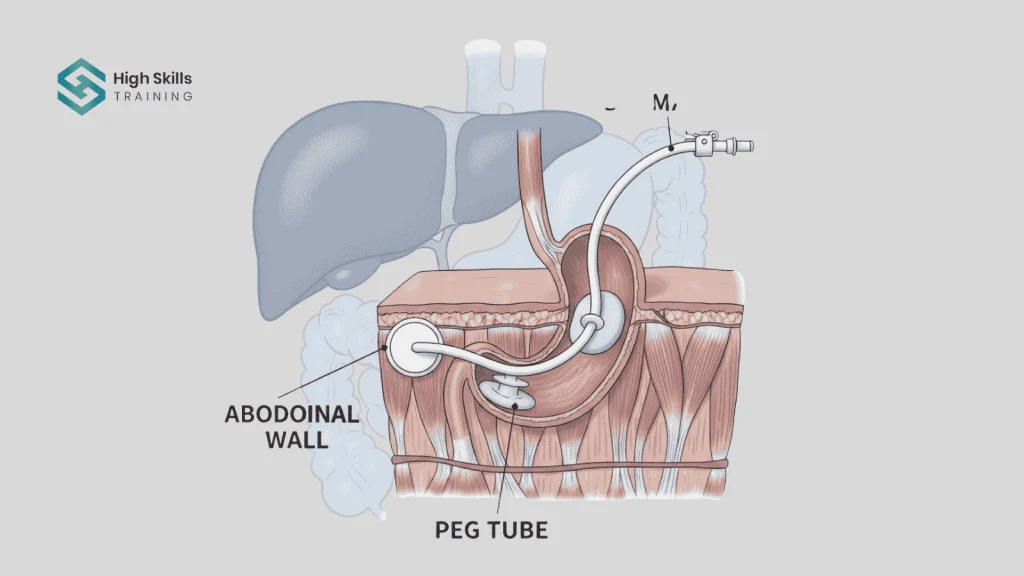
PEG feeding is the process of delivering nutrients directly into the stomach through a small tube. This process is required if a person is not capable of eating or drinking due to swallowing problems or neurological or other medical issues.
In this process, a PEG feeding tube is inserted through the abdominal wall and into the stomach through endoscopic techniques. Through this, it becomes possible to provide the patient with liquid nutrition, fluids, and medication through the feeding tube.
Also, PEG tube feeds can be administered for a short-term period or a longer period, depending on the requirements of the patients. It assists patients in maintaining their weight and preventing malnutrition. It also ensures that patients find feeding relatively easier.

PEG feeding is prescribed to patients who are not able to eat or drink safely. As an example, individuals with swallowing difficulties, neurological issues, severe illness, and those recovering after surgery require this approach to be fed sufficiently without the risk of choking or aspiration.
Also, PEG feeding is commonly used in stroke, motor neurone disease, or head and neck cancer patients. It is a safe, dependable means of staying hydrated and full of energy, and of obtaining essential nutrients when oral consumption is not possible.
In addition, PEG feeding can be suggested by doctors to patients who have a history of digestive or nervous problems. Such a measure will guarantee regular nutrition, positive healing, and quality of life, and also improve the patients’ living conditions, as there is no stress associated with feeding.
The procedure of PEG feeding is a planned medical intervention where a feeding tube is inserted directly into the stomach through the abdominal wall. It is recommended for patients who are not able to feed through the mouth but still have a functioning digestive system.
The process is normally done in a hospital by a qualified specialist using endoscopic guidance. It is considered to be a safe procedure, with minimal invasion and well-controlled. Proper preparation, careful tube placement, and effective post-procedure care are essential to reduce risks and ensure successful long-term feeding.
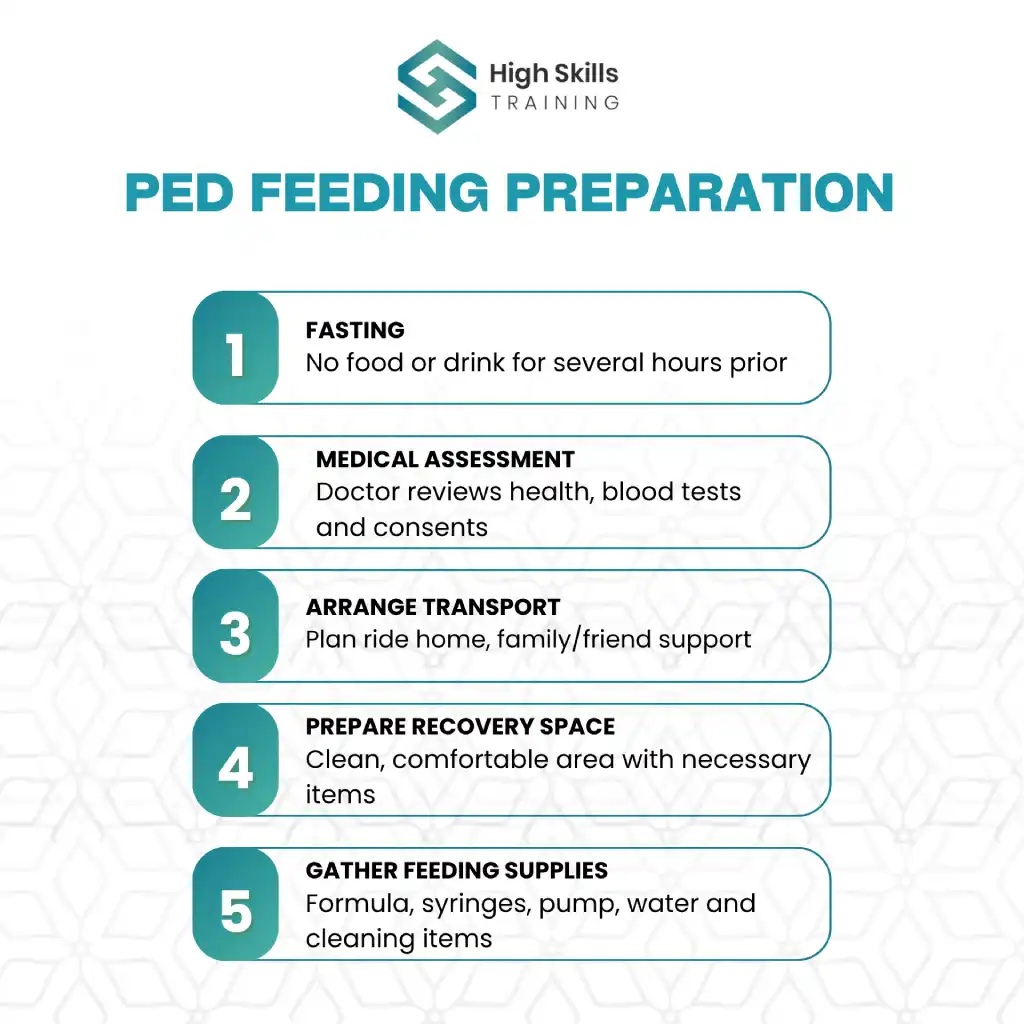
The procedure of PEG feeding can be more effective and safe with proper preparation. Premedication can minimise risks, ensure the patient is at ease, and reassure the carer that the tube can be handled on time once it is already inserted.
A pre-procedure evaluation by medical personnel is conducted, including a review of medical history, ability to swallow, and nutritional issues. This can involve blood tests, imaging, and consultations with the dietician to ensure the procedure is appropriate and patient-specific.
Also, transport arrangement, creation of a comfortable recovery environment, and the preparation of required supplies make the process a success. Anticipation helps maintain the patient’s well-being and the caregiver’s confidence once the PEG tube has been placed.
Before undergoing this process, factors such as medical history, swallow ability, digestive function, and nutritional needs are analysed. The process is deemed just, safe, and personalised using blood tests, imaging, and consultation with dietitians or speech therapists.
Throughout the day, minimal anaesthesia and sedation are offered in order to relieve pain. The endoscope is employed in managing the flawless positioning of the tube by taking advantage of a small opening located in the abdomen that fixes the endoscope, ensuring that it is safe while at the same time posing fewer risks.
Following the placement, the feeding is put off, and the site and the patient are monitored. Check for redness, swelling, leakage, and pain, provide pain relief and make sure that early complications are detected early so that they can recover safely.
Feeding is commenced after stabilisation of the tube site at a slow pace, depending on patient requirements. Pre- and post-feed flushing helps avoid blockages, and carers are educated to use proper methods of administration, nutrition calculations, and postures to minimise aspiration or gut complications.
Patients and carers are equipped to handle PEG feeding in the house and feel confident with all the procedures to clean up the site, flush the tube daily, feed and medication safely, check the equipment and be aware of the warning signs to help prevent infection, tube blockage and tube displacement.
PEG tube management can be properly used to sustain nutrition, hydration, and comfort and enhance energy, independence, and quality of life. Patients can also stay safe at home, with many of them able to maintain care and minimise their visits to hospitals, as well as obtain reliable, constant feeding.
PEG feeding is not very dangerous, but carers and patients should be aware of certain risks. A majority of problems can be treated successfully through adequate care, timely diagnosis, and medical advice.
| Risk | Description | Solution / Management |
| Infection at the Tube Site | Redness, swelling, or discharge at the insertion area | Wash the site daily with mild soap and water, apply dressings as prescribed, and contact a nurse if symptoms worsen |
| Tube Blockage | The PEG tube may be clogged with formula or medication | Flush the tube with water before and after each feed or medication; clear minor blockages using a syringe, and avoid thick or chunky foods |
| Accidental Tube Displacement | The tube may move or come out, interrupting feeding | Ensure the tube is secured properly and avoid pulling on it; seek immediate medical help if the tube becomes loose or dislodged |
| Gastrointestinal Issues | Nausea, vomiting, or diarrhoea may occur after feeding | Adjust the feeding rate or formula as advised by healthcare professionals and monitor patient tolerance |
| Aspiration | Reflux of stomach contents may cause liquid feeds to enter the lungs | Keep the patient upright during feeding and afterwards, and follow recommended feeding positions and schedules |
These precautions and solutions will assist in reducing complications to make PEG feeding safe and effective in long-term nutrition support.
PEG feeding training is essential for anyone responsible for managing a feeding tube safely. This includes patients who can self-manage, family members, informal carers, care home staff, and healthcare assistants, ensuring nutrition, hydration, and medication are administered correctly.
Training teaches proper cleaning, flushing, feeding schedules, and recognising warning signs, reducing the risk of infection, blockages, tube displacement, or aspiration. It gives carers confidence, empowers patients, and ensures PEG feeding can be handled safely at home or in care settings.
By receiving structured guidance and hands-on practice, all caregivers become competent in tube management, improving patient comfort and maintaining long-term nutritional health.
The National Health Service (NHS) has provided guidance on PEG feeding that helps in keeping patients safe while undertaking this method of feeding. In addition to this, it also helps in effective feeding. The NHS should be followed to the letter by all individuals responsible for the patients during PEG feeding.
Before the placement of the PEG, healthcare professionals assess swallowing ability, nutritional requirements, and overall health. This ensures that the procedure is suitable and safe, depending on the particular medical condition and lifestyle of each patient.
The NHS recommends sterile techniques of insertion, securing the tube properly, and daily checking of the site for redness, leakage, or irritation. Proper placement and hygiene reduce infection risk and improve comfort.
Feeds are prepared accordingly as instructed by the dietitian and given at an appropriate rate. Patients should maintain upright positions during and after feeding to avoid reflux, aspiration, or any discomfort related to digestion.
Patients and caregivers undergo training in tube care, flushing, and feeding, and training in how to recognise signs. NHS materials and training videos empower confidence and self-assurance in safe home care.
Ongoing follow-up visits with medical practitioners are necessary for monitoring nutritional intake and the functioning of the tube. Problems noticed in time enable changes in the nutritional program.
Adhering to these NHS guidelines will enable safe PEG feed delivery, reducing potential complications, to assure good nutritional health for patients.

Only for £59 (was £999)
Access 400+ expert-led courses for 12 months.No hidden fees. Cancel anytime.
Get Access NowPEG feeding begins with careful preparation, including fasting and medical checks. Light sedation is given, the tube is inserted via endoscopic guidance, secured, and the site is dressed. Feeding starts gradually with water, then liquid nutrition, allowing the body to adjust safely.
The PEG tube placement procedure usually takes around 20–60 minutes, depending on the patient’s condition and complexity. This includes preparation, sedation, endoscopic guidance, and tube insertion. Recovery monitoring continues afterwards to ensure correct placement and detect any immediate complications.
PEG tube insertion is considered a minor, minimally invasive procedure rather than major surgery. It is performed under light sedation, involves a small abdominal incision, and typically allows patients to recover quickly with minimal risk of complications compared to traditional surgical feeding methods.
The three main types of PEG feeding are: continuous, where nutrition is delivered steadily over hours; intermittent, given in multiple sessions daily; and bolus, where larger volumes are delivered over short periods. The choice depends on the patient’s needs and tolerance.
Yes, patients can shower with a PEG tube once the insertion site has healed. The site should be covered with a waterproof dressing, and the tube should be protected from soaking. After showering, the area should be gently dried and checked for redness or leakage.
To clean a PEG tube at home, wash your hands first. Gently clean the skin around the tube with mild soap and water, rinse, and dry. Flush the tube with water before and after each feed or medication to prevent blockages and maintain hygiene.
Patients with a PEG tube typically receive nutrition through liquid formulas. Solid food is generally not recommended unless specifically advised by a dietitian, who may allow blended or pureed foods depending on the patient’s swallowing ability and digestive tolerance.
The PEG Feeding Procedure is a safe and effective method for providing nutrition to patients who are unable to consume food in their usual manner. It ensures hydration, strength, and health while preventing choking or malnutrition.
If the care of the patient undergoing PEG feeding has been properly set up, performed, and followed up, it is not a daunting task, even in the hospital setting.
Understanding risks, compliance with NHS guidance, and knowledge of feeding skills enable empowerment of both patients and carers. With such facilitation, PEG feeding will improve the nutritional quality of life and overall well-being of individuals.

High Skills Training is a UK-based CPD training provider offering structured online courses and educational resources across health and social care, business administration, and professional development, supporting recognised standards and ongoing workforce development.
Get the latest insights, tutorials, and deep dives delivered to your inbox every week.
🔒 No spam. Unsubscribe anytime.
Stage 2 isn't always most painful. Discover which stage of pressure sores and cold sores actually hurts most, and how to manage it.
View This Blog
Understand gas safety regulations in the UK, covering compliance duties, Gas Safe rules, landlord checks, CO alarms by nation, and penalties.
View This Blog
What is a home gas safety check? Discover what it covers, annual rules for landlords, typical UK costs, and why it protects your household.
View This Blog
