


How to Get Pet First Aid Certified in the UK?
Learn how to get pet first aid certified in the UK. Find accredited courses, understand certification types, and discover why it matters for pet...
View This BlogSpecial Deal
£11.24Any Courses
Limited Time only


What are the 3 primary duties of a first aider? Preserve life, prevent deterioration, and promote recovery to manage emergencies effectively.
The duties of a first aider go beyond just providing immediate support in emergencies. Whether it’s in a workplace, a school, or a playground, every first aider follows the three core duties for effective first aid.
So, what are the 3 primary duties of a first aider? In simple terms, every trained first aider follows the 3 Ps of first aid: preserve life, prevent deterioration, and promote recovery. These principles serve as a foundation for every action taken in emergencies, helping a first aider stay calm and focused.
In this blog, we will break down each of these three duties and why they’re so important. Let’s get started.
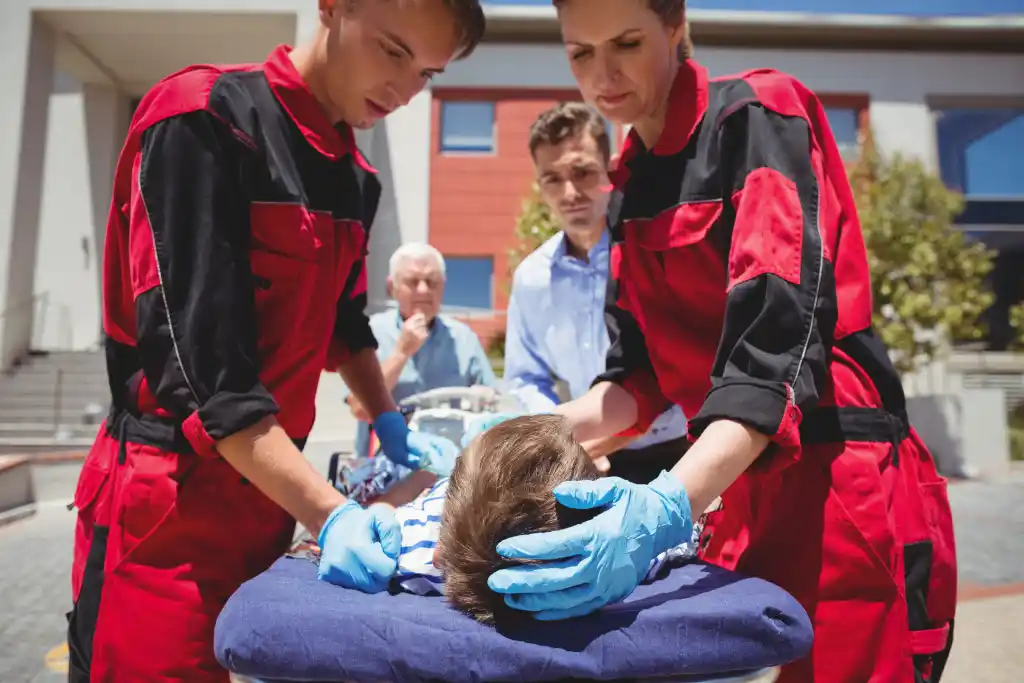
A first aider is a trained person who can give medical assistance in case of an emergency to the casualty. When someone is ill or injured, a first aider assesses the situation before starting the treatment.
Accidents can occur anytime and anywhere, and professional medical help isn’t always immediately available. In moments like these, a first aider is often the very first responder to step in and take control.
A trained first aider can manage an emergency and deliver vital support that can save lives. Their duty isn’t just confined to giving medical care, but also to reassure the casualty and make them feel safe. This small act has a significant impact on the casualty.
How well you can fulfil the responsibilities of a first aider depends on whether you have the qualities to become a first aider or not. The following qualities are a must to become a first aider:
With such qualities, you will become a first aider who is able to offer medical and psychological support during cases of emergency.
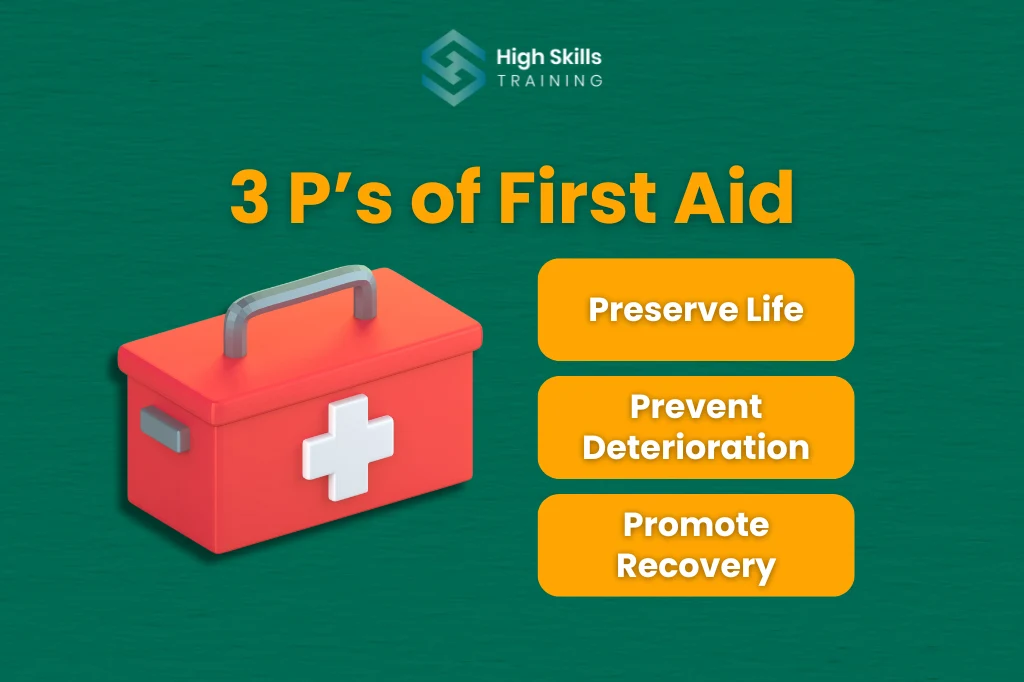
The three primary duties of a first aider provide structural guidance to a first aider to handle emergency situations. These three primary duties are often known as the 3 P’s of first aid, which are:
Let’s take a look at how these primary duties help a first aider to mitigate injury:
Preserving life is the first priority. No matter what, keeping the casualty alive until professional medical help arrives is your main goal as a first aider. When you arrive at the scene, make sure that the area is safe for you.
So, what is the best way to preserve life? The most appropriate approach is to stick to the CAB (Circulation, Airway, Breathing) standard. Under this protocol, you will begin by ensuring that the blood flow is normal and that the airway is clear and that the casualty is getting air.
Preventing deterioration in first aid means you have to stop the patient’s condition from getting worse. If the casualty is already in a bad condition, you have to ensure that they stay stable.
You can prevent deterioration by stopping the bleeding of the casualty by applying pressure to the wound. Some other ways to prevent deterioration are to immobilise broken bones, prevent infection in wounds, and keep the patient comfortable.
So after you have preserved the life and stabilised the patient’s condition, it’s time to work on the recovery from the injury. This means working to make the patient’s condition better.
In this stage, you have to work on the pain relief of the patient. You can start by putting the injured or ill person in the recovery position. They remain calm with the aid of small gestures, like speaking in soft tones, holding their hand, and maintaining eye contact.
As mentioned earlier, the three primary duties of a first aider are known as the 3 P’s of first aid. These are not just principles, these are a structured guide to help a first aider respond confidently in emergencies.
In case of any emergency situation, quick yet careful decision making is needed. So working in a structured way helps you to focus and avoid panic. When treating an injured person, acting quickly and accurately is key. That’s where the 3 P’s of first aid help you to provide the proper treatment.
Handling an emergency situation needs calm and focused thinking. The 3 P’s of first aid are designed to keep things simple so that you can easily fulfil your primary duties.

Just knowing the right techniques doesn’t make you a qualified first aider. Staying calm, confident and ready to act in an emergency situation is also essential. Every situation is different, but the qualified first aiders follow some effective methods that help them make the right decisions under pressure.
In any emergency or accident scene, first assess the situation. The initial assessment will give you a rough idea about what measures can be taken. If you see that first aid won’t be enough, then the casualty must be hospitalised immediately. If not, you may proceed with your treatment.
Qualified first aiders always start providing care by following the 3 P’s of first aid: preserve life, prevent deterioration, and promote recovery. Proper communication with the casualty eases the situation for them. It may not be much, but the way you speak to an injured person can help reduce pain.
Practice and preparation are also important to become a qualified first aider. Completing a first aid training is the best way to prepare yourself. The industry standard is to regularly refresh your knowledge and familiarise yourself with first aid kits and workplace procedures.
Yes, you can complete first aid training online. You can start with the basic first aid training and eventually move to the Emergency First Aid at Work (EFAW).
The most beneficial aspect of online first aid training is that you are able to get through with the training at your own pace. You may revise the lessons whenever you want. You will receive a CPD-accredited digital certificate from High Skills Training upon completion of the first aid courses.

Only for £59 (was £999)
Access 400+ expert-led courses for 12 months.No hidden fees. Cancel anytime.
Get Access NowThe starting salary of a first aider in the UK starts from £22K per year. With experience, a first aider’s salary can be up to £37K per year. The average salary can be around £29K per year. However, depending on your employer and the city, the salary range can be changed.
The three types of first aiders are:
✅ Appointed person only manages the first aid arrangements
✅ Emergency first aider (EFAW) is trained to handle first aid emergencies in different workplaces.
✅ First aiders have an in-depth knowledge of first aid, and they are trained to manage a wide range of injuries and illnesses.
If the casualty is conscious and has refused to take first aid, you should not force the treatment. The best you can do is to make them aware of the risk factors of refusing first aid. However, if the casualty faints, you can provide first aid for the purpose of saving life.
Understanding what are the 3 primary duties of a first aider is essential to become a qualified first aider in the UK. With the three simple steps of preserving life, preventing deterioration, and promoting recovery, you can protect both yourself and the casualty in emergencies.
As a first aider, you will be the first responder in emergency situations before professional medical help arrives. That’s why your duty is essential, as one informed decision step taken by you can make the difference between life and death.

High Skills Training is a UK-based CPD training provider offering structured online courses and educational resources across health and social care, business administration, and professional development, supporting recognised standards and ongoing workforce development.
Get the latest insights, tutorials, and deep dives delivered to your inbox every week.
🔒 No spam. Unsubscribe anytime.
Learn how to get pet first aid certified in the UK. Find accredited courses, understand certification types, and discover why it matters for pet...
View This Blog
Explore what is the purpose of basic life support and understand how CPR, compressions, and AED use help save lives in emergencies. Read this...
View This Blog
A body collapses, and suddenly silence replaces breath. Panic fills the air, yet your hands begin CPR, fighting to pull a life back from...
View This Blog
