




What Is the Most Painful Stage of Sores?
Stage 2 isn't always most painful. Discover which stage of pressure sores and cold sores actually hurts most, and how to manage it.
View This BlogSpecial Deal
£11.24Any Courses
Limited Time only


Explore what is the purpose of basic life support and understand how CPR, compressions, and AED use help save lives in emergencies. Read this full guide now!
In the UK, thousands of people experience sudden cardiac arrest each year. Many people die because they don’t get basic life support (BLS) in time. A quick response prevents brain damage and improves survival chances significantly. However, learning simple life-saving actions can make a difference.
So, what is the purpose of basic life support? BLS helps maintain breathing and blood circulation until trained medical professionals or emergency services arrive. Performing BLS quickly can protect vital organs and increase the survival rate in critical situations.
This blog will explain the purpose of Basic Life Support, core BLS skills including DRSABCD, chest compression, and rescue breaths. Step-by-step, you will also understand the importance of BLS and the myths and misconceptions surrounding it.
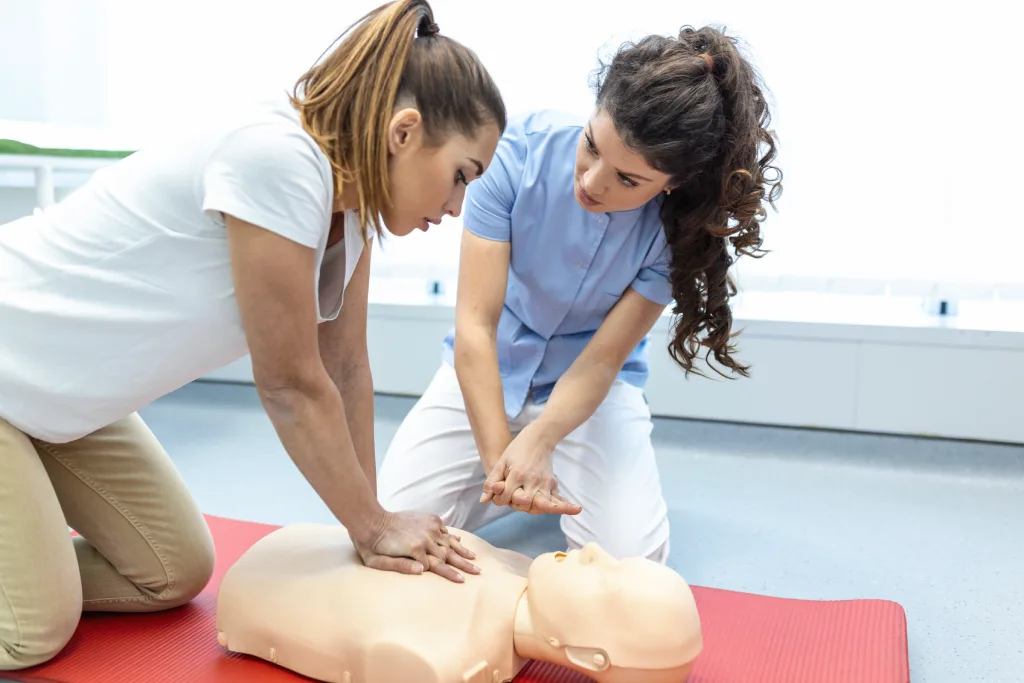
Basic Life Support (BLS) is a medical emergency practice aimed at supporting life. It ensures the continuation of the body’s circulatory, respiratory, and airway functions. BLS applies when a person suffers cardiac arrest or a serious injury. It increases the chances of survival when immediate care is provided.
BLS includes techniques like chest compressions, breathing, and the use of an automated external defibrillator(AED). These techniques help maintain the condition of the injured or affected person. They prevent the condition from becoming worse.
BLS is vital knowledge for all, including health workers. It increases the chances of survival when immediate care is provided. It can be practised anywhere, at home, or at work. While regular practice and refresher courses enhance skills and readiness for emergencies.
The main purpose of Basic Life Support (BLS) is to support and maintain life in emergency situations. Basic Life Support includes proper breathing, circulation, and opening of airways. Basic Life Support helps in saving lives by preventing brain damage and death.
BLS involves performing chest compressions, breathing, and the use of an Automated External Defibrillator. BLS helps patients recover from critical situations. BLS should be performed correctly to prevent complications and ensure proper recovery from cardiac arrest or respiratory arrest.
BLS also provides people with the confidence to act in emergency situations. BLS assists individuals in responding to emergency situations in homes, workplaces, and public places. BLS saves lives, and this is the reason BLS knowledge and practice should be common among people.
The core skills involved in Basic Life Support are simple procedures which assist in keeping a person alive in a critical condition. This provides a person with a chance to breathe and circulate blood until help arrives, hence increasing the chances of a person surviving.
Knowing basic life support skills makes people confident in their ability to assist others in a critical condition. This is applicable in any situation, whether you are in a home, working, or out and about, and you might be in a position to make a huge difference by saving a person’s life.
If you’re looking to build these essential skills, the Care Certificate Standard 12 – Basic Life Support course is a great place to start. It covers the key steps needed to respond in emergencies, including recognising life-threatening situations and taking quick, appropriate action.
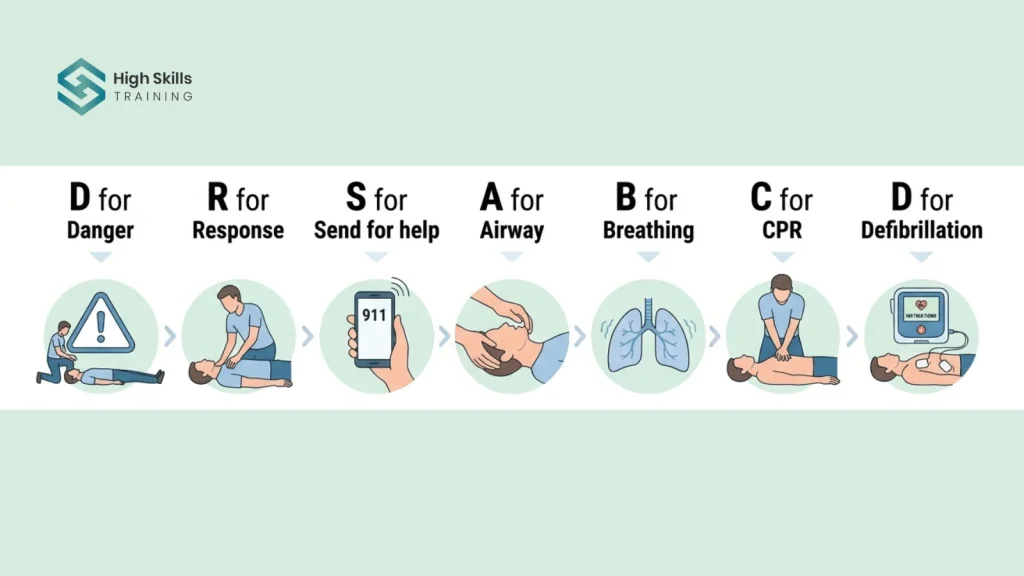
DRSABCD is a clear and structured approach to handling emergencies safely and effectively. It provides individuals with a step-by-step guide to follow in handling emergencies, ensuring that no important detail is left out in handling emergencies, especially when the casualty is in critical condition.
The first step in the process is to check for any danger. This includes looking for any danger around yourself, the casualty, and anyone else. This way, you are safe before you approach the casualty and are also in a position to help effectively.
The next step is to check for a response by shaking the person and making a sound. This enables you to understand the level of consciousness and act accordingly based on the reaction or response to the sound.
Check normal breathing by observing the chest, hearing the sound and evaluating the circulation of air. This should take only a few seconds and also enable you to assess whether a person needs CPR or a recovery position.
If the person is not breathing normally, begin CPR immediately using chest compressions and rescue breaths. This helps keep blood and oxygen circulating through the body, supporting vital organs until professional medical help arrives.
An automated external defibrillator should be used as soon as possible. This tool gives clear instructions on safe use. This tool can provide a controlled shock to a person’s heart to restore a normal rhythm in cases of cardiac arrest emergencies.
The maintenance of an open airway is critical in any emergency situation since a blocked airway can become life-threatening in no time. The head tilt and chin lift methods are used for this purpose, as well as checking for normal breathing.
Cardiopulmonary Resuscitation (CPR) is an important skill used when a person stops breathing or when a person’s heart stops beating. It combines chest compressions with rescue breaths to maintain blood flow and oxygen supply. This skill helps to protect a person’s brain from a lack of oxygen.
While performing CPR, it is important to be careful, as sometimes CPR can break ribs. And that’s why proper training is important.
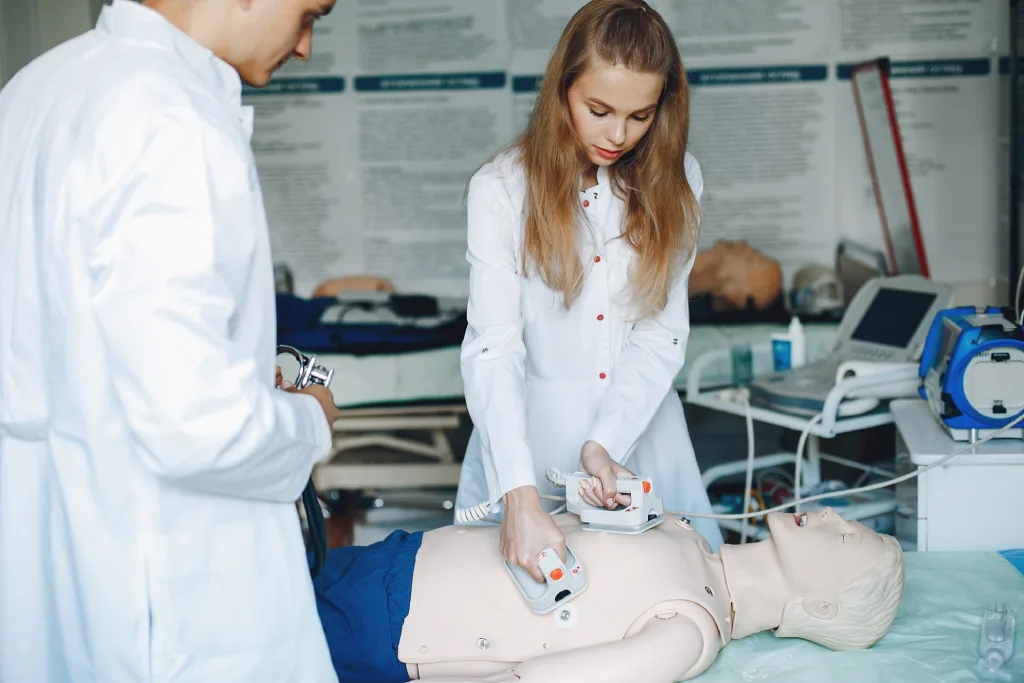
An automated external defibrillator (AED) is a small device that assists in restoring normal heart function during cardiac arrest. It is easy to use because it comes with voice prompts, and when CPR is performed, it is highly effective in saving a life.
Basic Life Support is important as it provides immediate care in life-threatening emergencies to help keep the person alive. It also prevents serious complications, increases survival rates, and promotes better recovery in critical situations.

There are many myths and misconceptions about BLS, and this is one of the main reasons why many people are unable to help in an emergency. Many people think that it is too complex and only professionals know how to do it, but that is not the case.
So, let’s clarify the myths and misconceptions to be confident and ready to help when in need.
Myth: Only healthcare professionals can perform BLS
Reality: Anyone with basic training can perform BLS effectively and potentially save a life in emergencies.
Myth: You might cause harm by performing CPR incorrectly
Reality: Doing something is far better than doing nothing, as inaction greatly reduces survival chances.
Myth: Mouth-to-mouth resuscitation is always required
Reality: Hands-only CPR is often recommended and still highly effective in many emergency situations.
Myth: BLS training takes a long time to learn
Reality: Basic skills can be learned quickly and practised regularly to build confidence and readiness.
Myth: AEDs are too complicated to use
Reality: AEDs provide simple voice instructions, making them easy for anyone to use safely and correctly.

Only for £59 (was £999)
Access 400+ expert-led courses for 12 months.No hidden fees. Cancel anytime.
Get Access NowThe first step in basic life support is to check for danger and ensure the area is safe. Then check the person’s response by speaking or gently shaking them. If there is no response, call emergency services and begin the BLS assessment steps quickly.
Common BLS mistakes include giving shallow chest compressions, incorrect hand placement, and stopping compressions too often. Some people delay calling emergency services or forget to check their breathing properly. Lack of confidence can also lead to hesitation, which reduces the effectiveness of the emergency response.
The golden rule of basic life support is to act quickly and keep going until help arrives. Early chest compressions and continuous care are vital. Staying calm and following the correct steps can improve survival chances and support the person during a medical emergency.
In basic life support, chest compressions are usually given at a rate of 100 to 120 per minute. For adults, the common ratio is 30 compressions followed by 2 rescue breaths. This cycle continues until the person shows signs of recovery or help arrives.
You should stop basic life support when the person starts breathing normally, emergency services take over, or you become too exhausted to continue. If the area becomes unsafe, you should also stop. Otherwise, continue providing care to support the person’s survival.
Understanding what is the purpose of Basic Life Support important for everyone. It can help maintain breathing, circulation, and the functioning of vital organs in emergencies. This can increase the chances of survival before medical professionals arrive.
Learning BLS skills like CPR, airway management, and AED use builds confidence and readiness. Being aware of myths, correct practices, and instant actions helps people respond effectively during emergencies. It ensures preparedness at home, workplaces, and in public places.
Finally, Basic Life Support enables individuals to take action fast. This can make the difference between life and death.

High Skills Training is a UK-based CPD training provider offering structured online courses and educational resources across health and social care, business administration, and professional development, supporting recognised standards and ongoing workforce development.
Get the latest insights, tutorials, and deep dives delivered to your inbox every week.
🔒 No spam. Unsubscribe anytime.
Stage 2 isn't always most painful. Discover which stage of pressure sores and cold sores actually hurts most, and how to manage it.
View This Blog
Understand gas safety regulations in the UK, covering compliance duties, Gas Safe rules, landlord checks, CO alarms by nation, and penalties.
View This Blog
What is a home gas safety check? Discover what it covers, annual rules for landlords, typical UK costs, and why it protects your household.
View This Blog
