


What Equipment Can an Occupational Therapist Provide?
What equipment can an occupational therapist provide? From bathing aids to stairlifts, find what keeps you safe and independent at home.
View This BlogSpecial Deal
£11.24Any Courses
Limited Time only


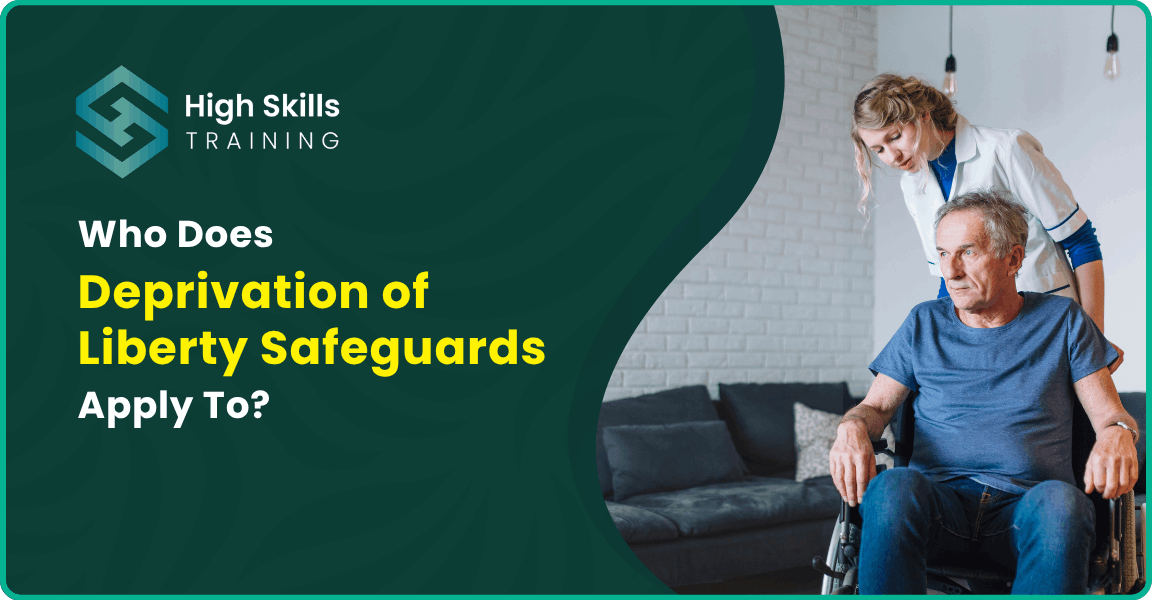
Who Does Deprivation of Liberty Safeguards Apply To? It applies to those aged 18 or over who lack mental capacity and need care in hospitals or care homes where their liberty is restricted.
In care settings, it’s sometimes important to restrict someone’s liberty to keep them safe. This restriction of liberty is the deprivation of liberty safeguards (DoLS).
But, who does deprivation of liberty safeguards apply to? It applies to people aged 18 or over, and those with a mental disability such as dementia or a learning disability. It also applies to those people who cannot consent to their own care but need restrictions to stay safe.
In this blog post, you will learn what DoLS are, who they apply to, where they are used, how the process works, and why they are important in care settings. Read on.

Deprivation of liberty safeguards (DoLS) is a legal safety system under the Mental Health Capacity Act (2005). DoLS only apply to England and Wales.
This safety system means taking away someone’s liberty to protect them. At first, this won’t sound right to some of you. But think of it this way, a person with dementia forgets whether they have taken their medication or not. In these cases, they need to be under 24/7 supervision.
DoLS can only be applied to those who are in a care home or hospital. This means restricting someone’s liberty in their best interest when they are receiving care in these care settings.
The deprivation of liberty safeguards doesn’t apply to everyone. DoLS are only applicable to those individuals who must check these points:
Deprivation of liberty doesn’t mean that they are being caged or locked up. This simply means that they are supervised all the time. What they are doing, what they are eating, and what care they need – all of these are continuously supervised by carers.
So, the deprivation of liberty safeguards apply to those who might be at risk of getting hurt if they are not under supervision. Now, this is also applicable to those who don’t have the mental capacity to decide what is good for them.
And those who don’t fulfil these criteria can not be placed under DoLS. Which means that if someone is receiving care in their own home, DoLS will not be applied to them. DoLS are applied only to those who are receiving care in hospitals or care homes.

The key principles behind Deprivation of Liberty Safeguards (DoLS) come from the Mental Capacity Act 2005. Because DoLS mainly apply to those who don’t have the mental capacity to make their own decision about their care.
These principles help carers to protect vulnerable people in a structured way. The key principles behind DoLS are:
There are six mandatory steps in the DoLS process. These steps help to make the decision on whether a person needs supervision or not. So, when it is time to decide whether a person should be under DoLS, these six steps must be followed:
When these criteria are met, then the formal DoLS authorisation process begins.

The two types of DoLS authorisation used in care settings are standard authorisation and urgent authorisation. Both are these authorisations used to make sure that any restriction on a person’s liberty is lawful and properly assessed.
Standard authorisation is the full and formal approval given by the local authority to deprive someone of their liberty to keep them safe.
The standard authorisation is granted after all six assessments are completed and confirms that the deprivation of liberty is necessary. The supervisory body for this authorisation is local authority such as the adult social care or DoLS team within the local council. And this authorisation is valid up to 12 months.
The urgent authorisation is a short‑term permission when there is not enough time to wait for a full standard authorisation. This allows a hospital or care home to deprive someone of their liberty in an emergency.
An urgent authorisation can last for up to 7 days, and can only be extended for a further 7 days if the local authority agrees. During this time, staff must still regularly check that the deprivation of liberty is still necessary and in the person’s best interests.
DoLS authorisation is granted by a supervisory body. This supervisory body can be a local authority or a local health board (NHS). Hospitals and care homes can also issue urgent or short-term DoLS authorisation. But to do that, they must first ask the local authority for permission to restrict someone’s liberty.
Before granting authorisation, the supervisory body appoints trained professionals to carry out the required assessments. These include a Best Interests Assessor (BIA) and a Mental Health Assessor.
They evaluate the person’s situation and confirm whether the deprivation of liberty is necessary, lawful, and in the person’s best interests.
As a care professional, it is important for you to prevent unlawful deprivation of liberty safeguards. And the DoLS training gives you the knowledge about how you can lawfully restrict someone’s liberty to protect them.
DoLS training gives you a clear and in-depth idea about why and when to prevent someone’s liberty. And it also teaches you the legal methods of preventing someone’s liberty.
When you are caring for someone who is under DoLS supervision, or you are in charge of the person’s deprivation of liberty, the DoLS training gives you a total understanding of what it is and how it works.
DoLS training is important for professionals in the health and social care sectors. Even care home managers, hospital administrators, safeguarding leads, or compliance managers can also complete this training to be aligned with legal procedures.
This training is also relevant for those who work with individuals who lack the mental capacity. This means nurses, care assistants, and social workers can complete this training.
The DoLS training is also useful for support workers, healthcare assistants, and anyone involved in making care decisions for vulnerable adults. In this case, the DoLS training can help them understand their responsibilities better and make sure that everything is lawfully managed.
The Deprivation of Liberty Safeguards (DoLS) is soon to be replaced by Liberty Protection Safeguards (LPS). This is to make the process simple and faster. This will also be more suitable for different care settings, including care homes, hospitals, and even community settings.
Now, you may be wondering, when will liberty protection safeguards be implemented? Well, the implementation of LPS has been delayed by the UK government, and no confirmed start date has been announced yet.
But the Liberty Protection Safeguards (LPS) will cover a wider group of people, including those aged 16 and 17. It will also apply in more settings beyond hospitals and care homes.
No, DoLS is not a separate law. It is part of the Mental Capacity Act 2005. DoLS provides a legal process to make sure that any restriction on a person’s liberty is lawful, necessary, and in their best interests.
No, power of attorney does not automatically override DoLS. If there is a valid Health and Welfare Lasting Power of Attorney, their decisions must be considered. However, DoLS can still be used if the restrictions are necessary and lawful.
A deprivation of liberty authorisation can be challenged by the person themselves, their family members, or their representative (RPR). They can take the case to the Court of Protection to review whether the authorisation is appropriate and lawful.
Understanding who does deprivation of liberty safeguards apply to is important for anyone working in health and social care settings. DoLS are designed to protect individuals who lack mental capacity and need supervision to stay safe in care homes or hospitals.
DoLS ensure that if someone’s liberty is taken away or restricted, then there must be a valid reason. DoLS also makes sure that this process of restriction must be authorised by the regulatory body.
As the system moves towards Liberty Protection Safeguards, it is even more important to stay informed. Knowing who the deprivation of liberty safeguards apply to helps care professionals provide safe, ethical, and legally compliant support in different care settings.

High Skills Training is a UK-based CPD training provider offering structured online courses and educational resources across health and social care, business administration, and professional development, supporting recognised standards and ongoing workforce development.
Get the latest insights, tutorials, and deep dives delivered to your inbox every week.
🔒 No spam. Unsubscribe anytime.
What equipment can an occupational therapist provide? From bathing aids to stairlifts, find what keeps you safe and independent at home.
View This Blog
How to become a Facilities Manager in the UK? Explore this blog to learn entry paths, qualifications, salary, key skills, and career growth opportunities.
View This Blog
Occupational therapy benefits explained: how it rebuilds independence, mobility and confidence for adults and children across the UK
View This Blog
